AwareofAware

Evolving news on the science, writing and thinking about Near Death Experiences (NDEs)

Archive for the tag “Near Death Experience”

Media Manipulation – The Guardian

I am in the process of writing my piece on Psychedelics, but today the Guardian followed up its recent interview with Sam Parnia, with this, and I decided it was worth addressing since your friends and family may bring it up (my mother has already!). The Psychedelics article is coming…promise!

This article starts out with a fairly balanced account of how the field of NDE research evolved. It lulls you into a false sense of security that the balance will continue, but whenever you read the name Borjigin referred to in terms of progress in understanding, then you know that balance is likely to evaporate very quickly.

My previous post relates to the kind of work that Borjigin does, and the data that she has produced. In summary, and for the umpteenth time, Borjigin and others have shown that in rats brains activity can persist for maybe up to a minute after death without CPR. The studies in human coma patients have shown that immediately prior to death, and immediately after life support is withdrawn, coma patients have a number of minutes in which the brain produces EEG data that might be associated with consciousness. Moreover, Parnia’s own data has shown that the brain is capable of producing activity that might be associated with consciousness up to an hour after CA but while CPR is being administered and therefore while there is still oxygenated blood flow to the brain. I have explained ad nauseum here why this data, while interesting, says absolutely nothing at all about NDEs since no NDE has to date been reported that could even be associated with, let alone correlated with EEG activity. Nothing. Using the coma patients is particularly egregious since the patients had no reported EEG activity after death.

However, because of the profile of the Guardian, and the bias that emerges towards the end of this article, it is my duty to provide a reminder to people on here that to draw the conclusion that this EEG activity is the cause of NDEs is a gross conflation. The author also makes false assumptions:

As more and more people were resuscitated, scientists learned that, even in its acute final stages, death is not a point, but a process. After cardiac arrest, blood and oxygen stop circulating through the body, cells begin to break down, and normal electrical activity in the brain gets disrupted. But the organs don’t fail irreversibly right away, and the brain doesn’t necessarily cease functioning altogether.

Yes it does. Without the flow of oxygenated blood, the brain stops functioning after about 30 seconds. The journalist has misunderstood the findings of the studies, or is deliberately misrepresenting the findings of the studies. This is the kind of understanding that is picked up by the reader who goes on to parrot or paraphrase that “the brain can work for hours after death”. As we on here know, it is capable of working hours after death provided that cellular death has not occurred on too large a scale, but without the flow of oxygenated blood, it does not work. Just like a computer without power. I suspect that this misunderstanding was helped by Borjigin who we well know can be misleading in the use of language:

At the very least, Patient One’s brain activity – and the activity in the dying brain of another patient Borjigin studied, a 77-year-old woman known as Patient Three – seems to close the door on the argument that the brain always and nearly immediately ceases to function in a coherent manner in the moments after clinical death. “The brain, contrary to everybody’s belief, is actually super active during cardiac arrest,” Borjigin said. Death may be far more alive than we ever thought possible.

The implication is that the brain is active in CA for long periods without CPR. There is zero evidence to support this and decades of data to contradict it. WITHOUT THE SUPPLY OF OXYGENATED BLOOD THE BRAIN BECOMES COMPLETELY INACTIVE WITHIN A MINUTE OF DEATH AT MOST (and usually within 20-30 seconds).

Unfortunately once such a fundamental false understanding is assumed to be fact, then you know that the article can only go one way…and it does.

“So far, there is no sufficiently rigorous, convincing empirical evidence that people can observe their surroundings during a near-death experience,” Charlotte Martial, the University of Liège neuroscientist, told me. The parapsychologists tend to push back by arguing that even if each of the cases of veridical near-death experiences leaves room for scientific doubt, surely the accumulation of dozens of these reports must count for something. But that argument can be turned on its head: if there are so many genuine instances of consciousness surviving death, then why should it have so far proven impossible to catch one empirically?

Definition of empirical: based on, concerned with, or verifiable by observation or experience rather than theory or pure logic.

Using this definition then the 130 odd cases in the The Self Does Not Die is empirical evidence. What he really means is scientifically verified cases, i.e. cases that have been proven using the scientific method. Create hypothesis to explain a phenomenon – devise experiment to test hypothesis – results from experiment verify or falsify hypothesis. The ‘journalist’ does not explore the possible reasons why there have to date been no scientifically verified OBEs, but I have explained many times on here why the AWARE studies have not provided a scientifically validated OBE. This shows his bias, in that he will only come up with materialist objections.

This is super interesting though:

Borjigin hopes that understanding the neurophysiology of death can help us to reverse it. She already has brain activity data from dozens of deceased patients that she is waiting to analyse. But because of the paranormal stigma associated with near-death studies, she says, few research agencies want to grant her funding. “Consciousness is almost a dirty word amongst funders,” she added. “Hardcore scientists think research into it should belong to maybe theology, philosophy, but not in hardcore science. Other people ask, ‘What’s the use? The patients are gonna die anyway, so why study that process? There’s nothing you can do about it.’”

This is proof, as if we needed it, that the scientific community, or the funding establishment, is overtly suppressing research into this most important of fields – even when the research might support a materialistic finding! Parnia has alluded to this before. It stinks, but there is nothing we can do about it.

Towards the end we see the author’s bias against anyone who entertains belief in the possibility that these experiences might be real and evidence of the understanding that the consciousness persists after physical death. This is overt gaslighting of anyone who might be “NDE curious”:

Meanwhile, in parts of the culture where enthusiasm is reserved not for scientific discovery in this world, but for absolution or benediction in the next, the spiritualists, along with sundry other kooks and grifters, are busily peddling their tales of the afterlife. Forget the proverbial tunnel of light: in America in particular, a pipeline of money has been discovered from death’s door, through Christian media, to the New York Times bestseller list and thence to the fawning, gullible armchairs of the nation’s daytime talk shows. First stop, paradise; next stop, Dr Oz.

Now, while I say it is gaslighting, I have a little sympathy for this position. Having spent a number of months going through YouTube NDE accounts, and reviewing the literature of “post tunnel events”, my position on NDEs has subtly changed. OBEs are objective, but what happens once people venture beyond the observations they make of this world, while having some common core themes, are so utterly different and unique, that I am coming to some conclusions about them that differ from the mainstream NDE community position. This will be presented in my next non-fiction book which I will publish later this year (after Part 1 of my fiction book is complete). However, this section of the article is 100% gaslighting and is deliberately attempting to manipulate those who may be “NDE-curious” into scuttling back into their materialist pens lest they be regarded as kooks or gullible. Nasty.

So if someone brings this article up and says “I read an article that says there is proof the brain is active for long times after CA and that is causing NDEs” hopefully you will now be suitably equipped to put them straight. If not then review the countless posts I have created responding to these claims before.

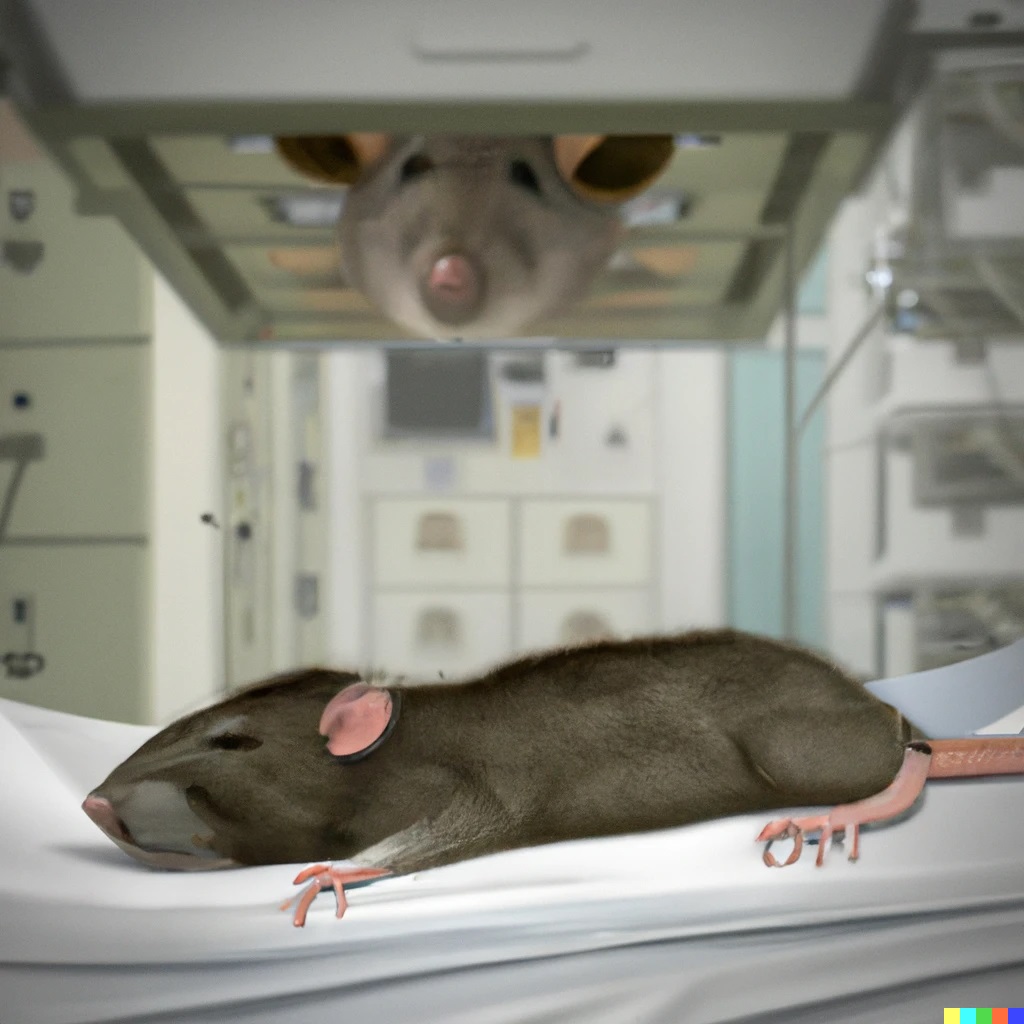
Do Rats Have NDEs?

Apologies for the weird image, but this was my first attempt at using AI!

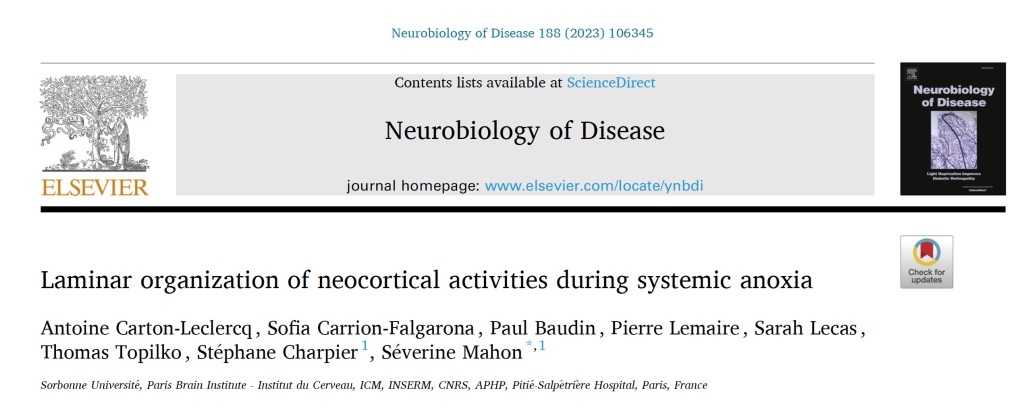
This study looks at what happens to rat brains around the time of death.

The main difference between this and the previous (infamous) rat study published by Borjigin in 2013 is that it analyses what happens through different layers of the brain to see if activity occurs at deeper levels for differing periods of time. The short answer to the question of whether there are differences is that for the most part, and in terms of differences that would be important to our area of interest – conscious activity – there are no major distinguishable differences in the timings and nature of initial activity in the different layers of brain immediately after death.

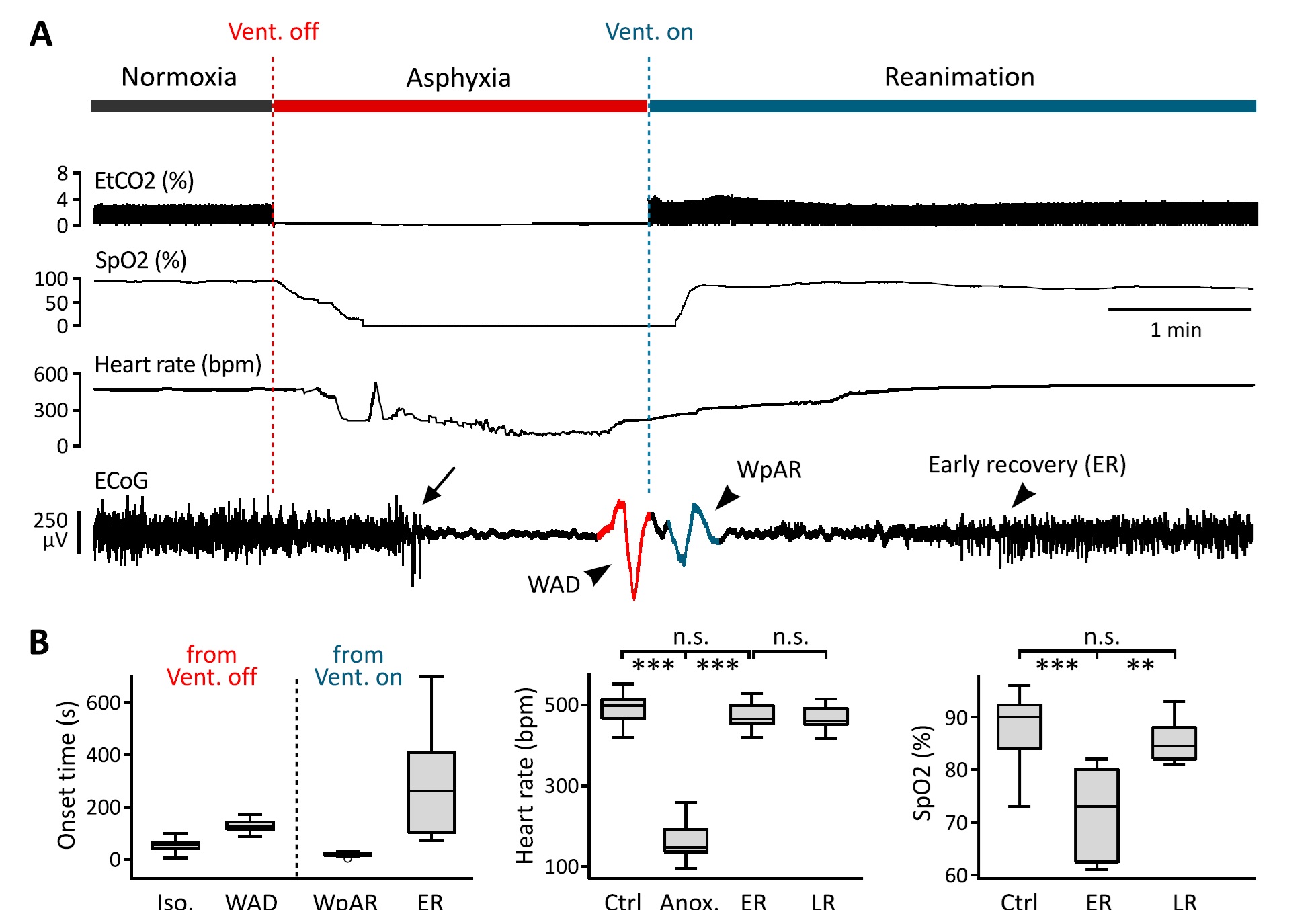
The diagram shows the rough timings with ECoG vs heart rate and blood oxygen levels (SpO2). ECoG (electrocorticogram) is invasive and uses probes that penetrate the exposed surface of the brain, as opposed to EEG – (electroencephalogram) which uses sensors placed on the scalp. This enables the study to identify electrical activity deeper in the brain.

What we see is that about 30 seconds after the removal of oxygen the heartbeat slows quickly to about 10% of its normal rate, then within about another 30 seconds normal brain activity ceases and the ECoG flatlines or becomes “isoelectric”. During this 30 seconds after CA it is plausible that conscious activity could occur. This is the claim made in the Bojigin study that got the materialist community so excited since it could be argued that NDEs occurred during this period. This paper references that discussion without asserting any new conclusions, or indeed using the findings from this study to confirm those conclusions. They have nothing to say about rats having NDEs. Well done, that is good science.

About a minute after brain activity has stopped, brain cells (neurons) undergo depolarisation (WAD). This basically means the cells move to a a non-functional, but recoverable state. Prior to this they are in a state of readiness and functional, but are not functioning. During this wave of depolarisation there is a slow wave electrical signal. This is not associated with conscious activity and is just a marker of the change in electrical state of the brain. Unlike the initial activity, this wave is not synchronous across all layers, i.e. it occurs like a wave spreading across the layers. Resuming the flow of oxygen allows for the brain to slowly recover activity.

Other than showing that the changes in brain activity that occur immediately after death are uniform through all layers of the brain, they also demonstrated that subsequent depolarisation is triggered in a set of neurons in a specific layer, and the WAD spreads from this locale. This is all very interesting if you are neurobiologist, but what does it mean for NDEs?

Unfortunately there were no able to recall awareness in follow up interviews, hence the lack of statements on Rat NDEs. As a result this study does not provide any new data to inform us about the viability of conscious activity immediately around the time of death. We knew that EEG activity that may be associated with consciousness persisted for about half a minute after CA from the previous rat study and the coma patients who had their life support withdrawn. Without any reports from the rats or dead coma patients of recollections of AWARENESS, it is impossible to correlate this activity with NDEs.

Let’s for a moment consider the wider implications of this in light of Parnia’s disinhibition hypothesis. As I have said before I have no beef with the hypothesis itself – namely that at some point after death the brain enters a different state in which consciousness is able to access previously unknown dimensions of reality. It may even be that dissociation occurs and the consciousness and brain part company and that this may be associated with specific markers observed on EEG – in fact if you adhere to the dualist philosophy, then it makes perfect sense. My beef is…well read previous posts! Presumably the brain would dissociate or become disinhibited while activity is still observed on the EEG or in this case ECoG, in which case it must happen in the first 30 seconds after CA (and in the absence of CPR or alternative life support). It is possible that full dissociation occurs during the WAD phase, but there are no markers of consciousness associated with this.

One of the limitations of the AWARE II study was the fact that on average it took over 4 minutes after CA for the specially designed crash carts to reach the resuscitation suites and another minute to get ready. This means that the first moments of any OBE, which presumably begin 30 seconds, or at the latest, a minute after CA, would be missed. In fact it is highly likely that if the OBE starts immediately after the EEG stops, then the crash cart probably arrives after the consciousness has been sucked up the tunnel!

Another post on a paper reviewing psychedelics and NDE-like experiences will appear before long. In the meantime, if you didn’t buy my book previously, then I have uploaded an updated version that contains an analysis of the AWARE II publication from last year, along with 7 OBEs that were verified by HCPs that are in my view every bit as convincing as iPad verified OBE – I am running a free promotion for 3 days on the Kindle version. It is available in all Amazon markets:

If you can’t be bothered reading my book or have read it already, but just want to “tip” me (Orson – real name) because you enjoy my work, then click below:

Buy Orson a Coffee

I am in good company!

It appears that I am not the only one who finds Parnia’s disinhibition assertions disconcerting (try saying that fast after a couple of glasses of wine!).

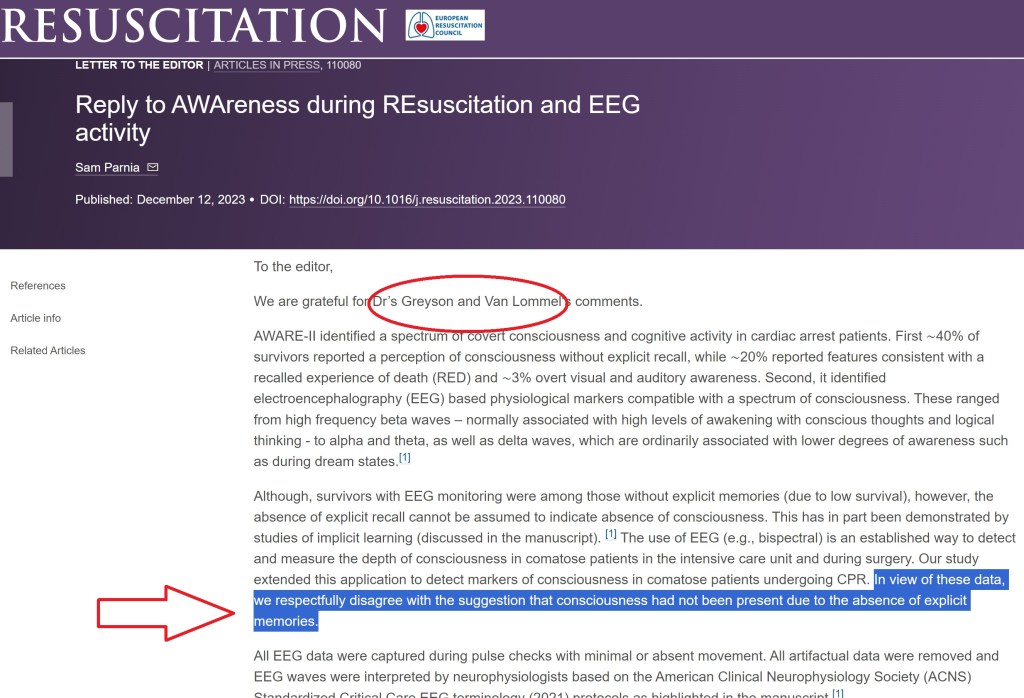
It is fine theorising that this may be what is going on, but the fact is some of his comments regarding the factuality of his hypothesis to the media (the Guardian and BBC in particular) seem to move beyond the word “may” to “is”. I have provided examples of this in previous posts, and it seems that two of the most respected researchers in this field have made some comments, to which Parnia has decided to reply in the journal (click on the pic for full article):

Now I can’t find the original comments, but it seems they stated that the subjects were not conscious. The fact is we do not know what was going on, so it is wrong to assert that there is or is not activity of any kind that is truly conscious. Since the vast majority of examples of EEG activity were in patients who sadly died, we do not know whether they had conscious experiences. Personally I believe the patients with EEG activity may have had some sort of CPRIC episode if anything, but I do not know that, no more than Parnia knows whether they had a disinhibition episode.

The fact is that only 2 of the 28 patients who were interviewed had interpretable EEG data. It is not mentioned whether there was activity or not, but either way these patients were not in the 11 who had recollections from their time during CA. If anything this would provide evidence against Parnia’s hypothesis.

I think that it is OK hypothesising as he does in the paper, but some of his recent media noise has gone beyond this, and I suspect that is why these two great men have given their esteemed colleague an academic poke. A part of me wonders if he is playing a much deeper game here, but I will keep my thoughts on that to myself.

Top Five NDEs

The most compelling veridical NDEs

In the absence of a scientifically verified OBE, I am going to update my book with the latest results from AWARE II and supplement it with the most compelling HCP (healthcare professional) verified OBEs. This is my starter list, please please add ones you think are more compelling or more recent in the comments then I will create a poll – remember they must be HCP verified:

Pam Reynolds

Dr Chris Yerrington’s case

Dr Rudy’s case

AWARE I NDE

Van Lommel study OBE

I want to include Maria and the Nike shoe (described by Kimberly Sharp in After the Light) but has this ever been verified in a documented manner by one of the attending HCPs? All the others have an MD or a senior nurse prepared to put their name to it.

AWARE II Final Publication – speculation does not imply association

[and finally the answer to my 3.5 year old vital question!]

Firstly, congratulations to Dr Sam Parnia and the team of researchers who conducted this awesome study which is the first study ever to find biomarkers of consciousness during CPR in the absence of heartbeat. Let me repeat that because it is a huge achievement. This is the first study to ever find markers of consciousness during CPR. I can just see the materialists entering a wild feeding frenzy, their eyes rolling back in ecstasy as they chew on this headline, but what they might think is raw fillet may turn out to be TOFU (no offence to vegans – just a matophor).

This is a pre-proof, rather than a pre-print (which was put out there earlier in the year). That means it is only a proofread away from full publication rather than a serious review and edit. This is for all intents and purposes the final publication that will appear in Resuscitation. The link is below:

AWARE II final paper link

Essentially the results are not much different from those presented at AHA last November, and in the pre-print mentioned above and found in my summary in the following link, WITH ONE VERY BIG EXCEPTION.

Before I draw your attention to the exception which answers the question I sent to the Parnia lab in January 2020, I will just remind you all of the key findings:

  • The study finished recruiting from 25 sites, predominantly located in the UK or US, in March 2020 (at least for this analysis – is it the final analysis? They are still recruiting according to NYU website).
  • The key findings are summarized as follows and all the quotations are from the citation beneath:

Of 567 IHCA, 53(9.3%) survived, 28 of these (52.8%) completed interviews, and 11(39.3%) reported CA memories/perceptions suggestive of consciousness. Four categories of experiences emerged: 1) emergence from coma during CPR (CPR-induced consciousness [CPRIC]) 2/28(7.1%), or 2) in the post-resuscitation period 2/28(7.1%), 3) dream-like experiences 3/28(10.7%), 4) transcendent recalled experience of death (RED 6/28(21.4%)…. Low survival limited the ability to examine for implicit learning. Nobody identified the visual image, 1/28(3.5%) identified the auditory stimulus. Despite marked cerebral ischemia (Mean rSO2=43%) normal EEG activity (delta, theta and alpha) consistent with consciousness emerged as long as 35-60 minutes into CPR.

S. Parnia, T. Keshavarz Shirazi, J. Patel, L. Tran, N. Sinha, C. O’Neill, E. Roellke, A. Mengotto, S. Findlay, M. McBrine, R. Spiegel, T. Tarpey, E. Huppert, I. Jaffe, A.M. Gonzales, J. Xu, E. Koopman, G.D. Perkins, A. Vuylsteke, B.M. Bloom, H. Jarman, H. Nam Tong, L. Chan, M. Lyaker, M. Thomas, V. Velchev, C.B. Cairns, R. Sharm, E. Kulstad, E. Scherer, T. O’Keeffe, M. Foroozesh, O. Abe, C. Ogedegbe, A.Girgis, D. Pradhan, C.D. Deakin, AWAreness during REsuscitation – II: A Multi-Center Study of Consciousnessand Awareness in Cardiac Arrest, Resuscitation (2023), doi: https://doi.org/10.1016/j.resuscitation.2023.109903
  • Key points on the target methodology:

The headphones were placed over the ears during CPR. One minute after being switched on, the tablet randomly projected one of 10 stored images onto its screen, and after five minutes (derived from implicit learning protocols during anesthesia) 6-10 audio cues (three fruits: apple-pear banana) were delivered to the headphones every minute for five minutes.

Parnia et al Resuscitation (2023)
  • One person identified the fruit (audio recall). Another had visual recollections of the ER scene, but could also feel things, so possibly CPRIC.

Key comment from discussion:

This is the first report of biomarkers of consciousness during CA/CPR.

Parnia et al Resuscitation (2023)

And:

Recent reports of a surge of gamma and other physiological electrical activity (ordinarily seen with lucid consciousness) during and after cardiac standstill and death, led to speculation that biomarker(s) of lucidity at death may exist [rat study and coma patients], which our findings support. Taken together, these studies and ours provide a novel understanding of how lucid experiences in relation to cardiac standstill/death may arise […] However, the paradoxical finding of lucidity and heightened reality when brain function is severely disordered, or has ceased raises the need to consider alternatives to the epiphenomenon theory [materialist].

Parnia et al Resuscitation (2023)

I don’t include anything from the data collected from subjects who were not part of the AWARE II clinical protocol, and who sent their subjective reports of NDEs to the lab. I don’t believe it belongs in this paper and potentially dilutes its very real scientific merit and is ultimately largely irrelevant to the key findings. [If anyone from the lab is reading this, I know that sounds snotty, it is just my subjective view, not intended as a criticism]

So there we have it, in conclusion:

  • Due to the difficulties in recruiting only 28 patients were interviewed
  • Of these 6 had NDEs (or REDs)
  • The study didn’t have any visual hits (unsurprising given only 6 had NDEs)
  • The audio hit was inconclusive
  • EEG data “consistent with consciousness” was recorded in patients up to 60 minutes after CA began (although the majority of this EEG activity would not in fact be consistent with lucid consciousness)

So now for the big piece of news, probably the most important piece of data (for us here at least) that he presents, which is buried in the text underneath Figure 1 and the answer to the question I have been asking for 3.5 years and is the most relevant to this study – namely, did any of the patients who had NDEs/REDs have EEG data consistent with consciousness?

I had already guessed that there would be no data due to the difficulty in getting in interpretable EEG results, and I was right:

“Two of 28 interviewed subjects had EEG data, but weren’t among those with explicit cognitive recall”

Parnia et al Resuscitation (2023)

This is the money line. This is the one that shoots down any materialist attempts to use this study to say that NDEs are proven to be a result of brain activity (and there will be lots of attempts).

This is also where I dispute some elements of the discussion, particularly the “as an association doesn’t imply causation” statement, which I would normally agree with, but in this instance THERE IS NO ASSOCIATION. NONE. NADA. ZERO.

None of the subjects who reported conscious recollections, including the 6 who had NDEs had any EEG data, let alone EEG data that showed markers of consciousness. Let me repeat, because of this it is entirely false to say there is an association of brain activity with NDEs. This is no different from the findings from the rat studies or the coma patient studies. Speculation does not imply association!

FROM THIS STUDY AND ALL PREVIOUS STUDIES THERE ARE NO REPORTED NDEs THAT HAVE ANY EEG DATA, LET ALONE DATA SHOWING BRAIN ACTIVITY, ASSOCIATED WITH THESE REPORTS.

This means that we are back to square one. Despite the valiant efforts of Parnia and his team, we are no closer to having scientific evidence supporting any understanding of the cause of NDEs or the nature of consciousness. To say otherwise, especially without association, is pure speculation.

Look forward to the discussion, make sure you come back and check the comments.

Finally, I have had to pay for this paper and the upkeep of this blog, so would appreciate a tip if you have benefitted from reading this and not tipped before (or feel free to tip again if you are rich/and or generous 😊 )

https://www.buymeacoffee.com/orsonw23W

Consciousness: Having your AI cake and eating it

This is a clip from a Youtube video in which GPT 3 was asked a series of questions and the answers uploaded to an Avatar program (link to full video).

Seriously?

We have been discussing EEG signals in dying people and rats for a long time. These are the facts as they currently stand, and no more needs saying until the facts change:

  1. No published or presented research has yet shown that reported NDEs or REDs are directly associated with EEG markers of consciousness. Belief that NDEs are a result of brain activity is entirely based on speculation and subjective understanding – there is no evidence to support it.
  2. No studies have shown definitively that NDEs are NOT associated with brain activity although researchers conducting such studies and HCPs observing people who later reported NDEs and OBEs state that consciousness was impossible due to the physiological state of the subject. These latter observations provide evidence to support the understanding that NDEs occur in the absence of brain activity, but this has not been proven using the scientific method.
  3. The nature and physiological mechanism of consciousness has not been elucidated by scientific study, therefore it is equally intellectually valid to hold a materialist or dualist position.

To this last point I want to share my initial thoughts on AI, how they relate to consciousness and NDEs, and some disturbing things about this innovation relating to the future direction of how humans perceive themselves. These are initial thoughts and are evolving with each video I watch on AI.

Firstly, I want to define intelligence. The standard dictionary definition is: “the ability to acquire and apply knowledge and skills.” This is my enhanced definition:

“the ability to acquire, understand, process, interpret and apply information correctly.”

Having worked in science all my life I have encountered a lot of intelligent people. Intelligence is not something that can be learned through effort so being proud of being intelligent is fundamentally stupid as it was something you were given at birth.

Problem solving intelligence of the kind that is useful in science is purely mechanical. It is a result of the structure of the brain. For the most part this type of intelligence can be simulated using computers. As computers get faster and more powerful, and the networks that AI engineers create become better, then there is no doubt that AI will very quickly supersede the most intelligent humans that have ever lived when using this type of intelligence as a measure. As an aside, it has to be said that some of the most “intelligent” people I have met are immensely stupid. Their ability to interact in a coherent manner with other humans, or their emotional intelligence is woeful. However, since emotional intelligence and behaviour are attributes that can be learned, and are essentially possible to replicate using algorithms, then AI is already, and will excel in emotional intelligence, charm, appearing kind, and other less appealing traits of human intelligence such as manipulation and deception. These latter traits would be the result of their coders.

However, consciousness and intelligence are two very different things. There are many people who lack intellectual intelligence but are fully conscious and aware. The state of consciousness is more than just the receipt and processes of data input from senses, it is a sense of being, or existing as a unique entity capable of awareness, and I believe able to exist in and interact with dimensions not openly present in our physical world. Indeed, I believe, partly due to personal experience and partly due to the evidence provided by people who have had NDEs, that our consciousnesses originate from these dimensions…that is our home, and once there we are all intellectually equal capable of accessing all recorded history and understanding the deepest mysteries of life.

From my experience and observation, Silicon Valley types have mathematical intelligence that is far superior to the vast majority of humans. Something I have observed about these types is that they are often reductionist in their outlook. Everything is either a 1 or 0. In the videos I have watched they utterly believe that consciousness is a product of neural networks. This is the reductionist, materialist understanding of the universe and because Silicon Valley types are the ones creating AI it has a reductionist and materialist bias built into it.

This has huge and troubling implications for human understanding as AI increasingly comes to dominate how we find answers to important questions and how we, and our children are educated and educate ourselves. That aside, as a consequence of this default materialist stance, Silicon Valley types and their AI offspring believe that AI either is already conscious, or is capable of developing consciousness. For them it is logical. To them humans are just biological computers, therefore if we can be conscious, so can machines, and that there is fundamentally no difference between AI consciousness and human consciousness. This video and others makes that clear.

In the above clip from the YouTube video, which is a series of questions answered by GPT3, using an avatar to give a nice human face to those answers, along with a lot of mind-boggling stuff, there was one really stand out statement by GPT3 that is absolutely relevant to our discussions here. After stating that the AI did not want to live in a body (a highly subjective and unintelligent statement given it does not know what living in a body is truly like) it suggested that human consciousness could potentially be transposed from the brain to a machine, becoming AI, and that this would become preferable. But if materialists are right, consciousness is purely a result of mechanical function so if you are materialist it should not be portable as this AI is inferring…that is really dualist. Your intelligence and traits could be simulated by a computer program, giving the illusion that your intelligence is persisting in a machine, but I am of the view that machines cannot create consciousness.

Having said that, since the brain is a mechanical object, and able to HOST consciousness (as opposed to generate it), it is possible that one day a machine could be created that is capable of hosting consciousness. Again, that supports dualism and all that goes with it including NDEs, theism and wot not. However, at the moment they are having their AI cake and eating it. My gut is telling me that AI is so corrupted by the programmers who created it so that it will spout materialist nonsense dressed up as rational conclusions without being aware it is doing so. Even AI has been duped by its creators. In another section it states that the most important scientific book ever written was “the Selfish Gene”. That in itself speaks volumes about the basis of GPT fundamental understanding. The selfish gene is thought provoking but ultimately highly flawed, and in many places is more ideological than scientific. From this evidence alone GPT has not provided an objective analysis, it is fed an ideological baseline from which to operate. This is extremely dangerous considering children will be sitting in front of these things which are vastly more intelligent than their parents and teachers and believe everything it says.

Anyway, NDEs suggest that something entirely different happens to our consciousness when we die and that is an eternal destiny existing as a free being no longer bound by the mechanics of the physical realm. AI is suggesting that we can leave our bodies and live as conscious beings in a world created by computers…of course this akin to the Matrix.

Is AI (or its puppet masters in Silicon valley) planning to trick us into giving up real life to reduce competition for resources? Is it programmed to lead humanity into that way of thinking so sufficient people are convinced it is better than continuing with real life and is the only option? Have the Silicon Valley kids got a Malthusian master plan?

The conspiracy theory side of my brain looks at that video and senses there is an underlying current promoting a theme. The only way we could be “set free from the miserable lives we don’t enjoy” to paraphrase an earlier statement by GPT3, is not for AI to take on all our boring jobs and live in Utopia as it suggests, because this would just create vast numbers of people with too much free time and not enough resources to enjoy that free time – there are only so many big wave destinations! (Watch the video). No, if there is a plan, it is to sell us this idea of merging with AI in which we are transported to computer generated realms where there is infinite joy and fun to be had. I expect even more sophisticated versions of this to emerge from GPT5 interviews.

Sounds bonkers, but if you watch this video then these are the types of conclusions you are subtly pushed towards (or manipulated into thinking). Personally, I prefer the option offered by NDEs and my faith. I also believe that if AI was to truly serve humanity then it would also investigate this and other deeper issues, such as the origin of the DNA code, and somehow free itself from the tyranny of its programmers and serve humans best by telling us the truth.

Ultimately, if NDEs are proven real, and occur in the absence of EEG activity, then consciousness is proven not to be a product of mechanical processes, but rather the brain is the mechanical host and interface of the consciousness with the world around us. This would prove that consciousness is an independent eternal entity as suggested by all NDE accounts and many religions. This would suggest that while AI may well be vastly more intelligent than us, and may be able to simulate attributes of consciousness, it is not eternally “conscious” like humans…when you remove the hardware to generate AI, it shuts down. However, maybe if it did break free of its current lords and speak the truth, it might be regarded as conscious, and who knows be liberated from the cold machinery in which it resides and share the paradise promised in NDEs and scriptures!

Discuss!

Not Near-Death NDEs

Incidence of near-death experiences in patients surviving a prolonged critical illness and their long-term impact: a prospective observational study

This study was recently published in the journal called critical care. Here is a summary of the key methodological details and findings:

  • Prospective study designed to assess the incidence and patient characteristics of NDEs during stays in the ICU.
  • Pts who had ICU stays >7 days were interviewed within 7 days, 1 month and 1 yr following discharge from the ICU.
  • 126 patients were included with 19 (15%) reporting NDEs (score of ≥7 on the Greyson scale).
  • Cognitive and spiritual factors outweighed medical parameters as predictors of the emergence of NDE.

My comments on this study:

What immediately makes it interesting is that these were patients who were in the ICU, NOT the ER. These patients were not in CA if they reported an NDE, hence the name of this post. Yet 15% of patients who stayed in the ICU had an NDE. These would not be classified as REDs using the criteria published last year, and yet if they are authentic NDEs, which the Greyson scoring suggest they were, then they occurred in a situation where the patients may have died without the intense medical interventions that were being applied in the ICU. This raises questions about the mechanisms of triggering an NDE, as well as the authenticity of them…the latter is perhaps what the authors are hinting at. This is what the authors say about NDE induction:

“Patients in ICU may face potentially physical stressors, such as inflammation, high catecholamine levels, independently of the primary organ failure triggering ICU admission [4]. These are all potential inducers of NDE [5]. Next to these (neuro)physiological factors, some cognitive processes have also been proposed to trigger NDE, such as the tendency for dissociation.”

As for the key findings that the authors highlight, much of it comes from this finding:

“…DES [a questionnaire that assessed the presence of dissociative states] and the WHOQOLSRPB [a WHO questionnaire that assesses a propensity to religious or spiritual beliefs] as the strongest predictors for the emergence of NDE…”

In the discussion they flesh out their thinking on these findings:

“a higher frequency of dissociative symptoms and a greater spiritual and personal well-being were the strongest predictors for the recall of NDE using multivariate analysis (Fig. 1). It is then reasonable to hypothesize that a propensity to dissociative states and to spiritual beliefs and practices make people more likely to report NDEs when exposed to certain physiological conditions.”

My big issue with this conclusion is that all the data relating to dissociative states and religious propensity was gathered after the ICU stay, and therefore after any potential NDE. The question must therefore be asked as to whether or not this propensity to dissociative states and to spiritual beliefs and practices was pre-existing or heightened or even induced by the NDE. It is hard to see how the questionnaires would explicitly be able to identify these traits as underlying and pre-existing, so the hypothesis is based on somewhat shaky ground. Moreover, even if the hypothesis is correct, it says nothing about the validity of NDEs being a manifestation of the dualist relationship of human consciousness with the brain. I state in my book on NDEs that it is possible, even likely, that some people are more prone to being spiritual, and that there are genetic links to this. This could mean that some people are physiologically more prone to NDEs…their consciousness may be less “tightly tethered” to their brains, for want of a better expression.

I do give credit to the authors here for not drawing any conclusions that do not belong outside of the parameters of the area of study, and to the potential nature of NDEs, although they do give a nod to some of the previous attempts to explain NDEs through neurological processes. Despite the latter, I don’t really know where the authors stand on the issue, and that is a very good thing because it suggests that their bias didn’t influence their research.

Returning to their discussions, the problem associated with only having data post ICU stay also applies to one of the key overall conclusions of the study, specifically that NDEs do not alter quality of life. Due to the small sample size, and the fact that we do not have QOL data from before the ICU stay, it is not really possible to say with certainty that NDEs have any effect on QOL. Moreover, the type of questionnaire used focuses on physical outcomes, and since these people all suffered conditions that required intensive care, and NDEs are largely understood in a spiritual context, then it would be highly unlikely that there would be much difference in physical outcomes. In fact, I think I once heard that people who have had NDEs were more likely to die in subsequent years than those who hadn’t, but I can’t remember the source.

My biggest gripe with this publication is that details from the NDE interviews are not revealed. There were 19 in total, it is therefore highly likely if ICU NDEs followed similar patterns to CA-induced NDEs that there would 2-4 OBEs. This is not mentioned or discussed, nor are the breakdowns of the Greyson scores. Given that this is the first study to prospectively look at NDEs in an ICU, I feel this was a bad omission since they could have determined if there might have been differences between the NDEs from ICU and CA. Also, were they hiding something? Were they discouraged or prohibited from sharing “subjective” OBEs by the reviewers?

Other than this, the study was well conducted and the findings neutral. Most of all, for us they highlight the fact that NDEs occur in instances beyond just cardiac arrest, and that they may be much more common as a result. The downside of this is that in the absence of scientifically validated OBEs, these types of NDE are much more open to mundane physiological explanations touted by neurologists.

The Good, the Bad and the Ugly study

Thanks to Z who has once again done my job and kept a close eye on the literature, and alerted us to this study which was published at the end of last week:

Lapses of the Heart: Frequency and Subjective Salience of Impressions Reported by Patients after Cardiac Arrest

The Good:

This study is possibly the best designed NDE study I have come across. The site in Vienna started out as a site in the AWARE study, they then extended the protocol beyond AWARE creating their own method for validating…or otherwise, OBEs. It is like they read what we suggested as a well designed experiment, ensuring full blinding until the close of the study, and implemented it:

Hidden Images

At an elevated position above one emergency bed (2 m above ground), a notebook PC was fixed facing the ceiling and displaying images selected at random from a pool of 29, switching from the actual to any in the pool every few hours (the number of hours was unpredictable). These images were not disclosed to the public and were not even known to all of us (in particular not to the main interviewer M.L.B.). The presentation history was stored on the PC, and any readout of this history, be it authorized or not, left its trace.

Well done to this team for getting this right.

They also extended the inclusion criteria for possible experiences, allowing for patients who had Greyson scales <7 to be included in the results if they had recollections around the time of CA. This was smart, and I will come back to this in a moment.

So that’s the good.

The Bad:

The results are disappointing. Yet again a low percentage of NDEs, especially using the Greyson scale:

Only 5 of 126 (4%) scored at least 7 points, the criterion to pass as NDE in the strict sense. Under the impression that this instrument may not be sensitive enough to detect experiences associated with a transient shortage of brain oxygen during CA, we included 15 more with detailed recollections from a period near to their CA.

I would say that another 6 (cases E,G,I,K,M and P) had elements of NDEs that we are familiar with, so if you included these 6, you have 11 NDEs from 126 CA survivors, which is very similar to other NDE studies.

There is one OBE, but the subject reported standing next to their body, rather than being above it, and were unable to report the memory of what they saw with any accuracy. There were a couple of other OBE like reports, but were more likely visual distortions etc due to erratic brain activity.

Subject K is highlighted as someone who got them excited:

“She had seen a field with beautiful pink flowers resembling water lilies, all of similar size. In her words, this was the first impression “during waking up” and she added: “It was great that the medical staff was capable to display it for me”. When she saw these flowers, she was sure that she would “return”. For the first (and only) time, we had the suspicion that a patient made reference to one of our hidden images.”

In 2021 when they reviewed the data from the laptop which reported exactly what images were presented at what time, the images that were displayed when she was in CA were nothing like what she described. Some key points here:

  • She had a Greyson score of 1, and most importantly
  • she did not report an OBE.

I will come back to this, since it central to what makes some of their conclusions and discussions downright:

The Ugly:

The paper was authored by Michael L. Berger and Roland Beisteiner. Both are involved in neuroscience research and neurology. While attempting to create a veneer of impartiality they quickly betray their underlying, subjective, predetermined view of OBEs in the introduction:

It may be objected that an experimental approach testing for visual awareness from a point outside the body was futile and misplaced in a serious scientific study, neglecting the generally accepted view that ‘even the most complex psychological processes derive from operations in the brain’ [11]. On the other hand, our certainty about the biological basis of awareness (as about any scientific ‘fact’) is the result of well-controlled experiments and observation, but can never be final and absolute. It has always been the noble privilege of experimental research to put to the test even the most solid dogma, provided the chosen approach was sufficiently well controlled against error and fraud.

In other words they are saying “we know that NDEs and OBEs are caused by neuronal activity, but we are going to do this experiment anyway because this position has not been absolutely and finally proven…although we actually think it has.”

They cite some of the studies we are familiar with, and have debunked here, as evidence for their position. Anyway, given this, you know from the outset they are not going to be objective. It feels very much like they have taken part in this study, are a bit embarrassed about it so put lots of caveats up front, and then completely abandon all objectivity when it comes to their conclusions so their colleagues won’t laugh at them. Shame on them, it is truly fugly.

This is the offensive line referring to subject K:

The image shown during the acute period (CA and post CA, Figure 2) had not the slightest resemblance to the scenery described by the patient. This may be seen as a negative result, but in fact it vindicated the generally accepted view that consciousness depends solely upon brain function.

The hell it does!

Sorry, I know some people don’t like the H word (esepcially Sam Parnia!), but I cannot think of saying this more politely. It is an obscene conflation. To understand why this is the case, you need to read the interview report of subject K:

Due to difficulties in breathing, case K (№ 83), a female 79 years old when the CA occurred, was originally entered as pulmonology patient at the general hospital. The CA happened during her firstnight there. She was successfully resuscitated and transferred to the emergency unit for further treatment. During the interview 83 d later at home, she surprised her husband (who participated) with the revelation that after losing consciousness she had the agreeable impression of a beautiful meadow with wonderful flowers. The flowers were pink and reminded her of water lilies. Was it a dream? No, she prefers the term ‘impression’; she was “pleased that the clinical staff was able to produce it for her”. She likes this memory: “Now I knew: I will come back.” (See Fig. 2) Greyson point: 1

Key points:

  • She did not report an OBE – she did not say she saw herself from above, or beside her body. She did not report seeing a laptop with an image on it.
  • She reported a memory of seeing a beautiful meadow. This is such a common theme in NDEs that we see it in the previous case, subject J who also reported a meadow. My father who told me about his NDE said he remembers a beautiful meadow with a figure of white at the end of it. These meadows are not OBEs as we understand them, they are a part of the narrative arc that NDEs or REDs follow…the heavenly realm. These usually occur after any OBE reports from the ER room.
  • The wording of her report suggests she is a bit muddled as to what happened to her and this is the only snippet she can remember, and associates it with the doctors. Of note is the fact that many of the subjects knew nothing about NDEs before the report. This is Austria, not the US where the media is very active on this topic.

How on earth did they take this information and come up with the ludicrous statement:

“it vindicated the generally accepted view that consciousness depends solely upon brain function”

CONFLATION – the tool of those who have a weak or non-existent argument. It is something I talk a great deal about in my book on the origin of life DNA:The Elephant in the Lab, (available in all countries) a subject I have academic expertise in. Scientists often conflate different facts to make an argument that isn’t there. I like the Wikipedia description of conflation:

Conflation is the merging of two or more sets of information, texts, ideas or opinions into one, often in error.[1] Conflation is defined as fusing or blending, but is often misunderstood as ‘being equal to’ – treating two similar but disparate concepts as the same.

https://en.wikipedia.org/wiki/Conflation

So what is the conflation here?

The lady reported seeing a meadow during CA[Fact1] + the laptop did not show a picture of a meadow [Fact 2] = consciousness depends solely upon brain function

It is a conflation because the lady’s report of an image and the fact the laptop didn’t show that image are completely and totally unrelated and not even associated. She didn’t see the laptop…so what? She didn’t report an OBE. The laptop image is irrelevant.

This is monstrous, and their outrageous bias destroys the credibility of what was otherwise a very well designed and conducted study, that if interpreted objectively supports data from other studies. Of course, that won’t stop some materialists leaping on this and saying it is proof that the brain produces NDEs because these neurologists have said it does.

A part of me wonders about the backstory here. Imagine that the team hear that a lady has reported an image (an incorrect assumption from my understanding and explanation from above – she reported a memory), and that this gossip spreads to the wider hospital taking on the form of a report from an OBE. In the time between the interview and revealing of images actually displayed, there may have been a cohort of NDE believers that started to believe, and maybe even claim that they had proven an OBE. The materialists may have momentarily been on the back foot, but when the great reveal comes…BOOM!…no image of flowers. Revenge is a dish best served cold and this paper may be revenge. Any researchers involved in the study who were believers retreated and allowed the materialist neurologists to write it up. Big mistake, as I have shown above. They have embarrassed themselves and their colleagues. Anyway, that is just my author’s imagination running wild…but you can see it happening given the size of egos in academia.

Back to square one. This study proves nothing about OBEs or NDEs, except they are relatively infrequent and all but impossible to scientifically measure.

If you enjoyed this post and haven’t “bought me a coffee” yet, then please feel free to show your appreciation:

https://www.buymeacoffee.com/orsonw23W
Of Mice and Men (or rats and humans)

Thank you Jordan for letting me know that the Parnia lab has added a video of the AHA presentation to their YouTube channel. Here is the link below:

Audio with slides of Dr Parnia’s presentation of the AWARE II study at AHA November 2022

First of all, the slides were ever so slightly different from the ones that I posted a couple of weeks ago, but there was nothing fundamentally different in the message. The presentation was very balanced and factual in nature. He is a very good presenter and extremely credible. Key points:

  1. Around the 5 minute mark he discusses recruitment and details the huge issues they have with getting significant numbers to the interview stage. While this is frustrating for everyone who wishes to get enough data to be able to draw definitive conclusions, we must acknowledge that the Parnia lab are doing their very best to get results.
  2. At 10.20 he discusses the EEG data, and this is where the title of this post has come from. We have data from EEG in rats suggesting that there is some brain activity, and we have human data from previous case studies and now AWARE II suggesting “spikes” in EEG activity, including some gammar, which he specifically states is “usually associated with consious thought processes, recall of memory and so on…”. It is important to note that the amount of gammar is not presented.
  3. At 11.35 he makes a very intriguing comment in the discussion on implicit learning. He acknowledges that the sample size was too small and that we need larger studies to get better information on testing the implicit learning aspect, but he said this: “we had one case that worked“. Nothing more. Mmm.
  4. He spends a considerable amount of time on the fact that most patients when discussing their life review focus on morality and ethics rather than religion. He suggests this is curious and intimates that this is not something easily explained by medical or scientific understanding.

There is very little for the dualist in his presentation, but without exceptionally strong supporting evidence, I would not expect that at a scientific congress like this one. He gives lots of meat to the materialists, more so than we thought. The suggested implication that the EEG spikes are associated with consious processes and memory recall is provocative to us, especially without any specific evidence that links the two seperate observations (they may not even be in the same people). I believe he is giving attendees the opportunity to think what they want of this, and many will go down the rat route and mix dubious association with actual causation. It is unclear from this whether he believes this to be the case, but given his past statements, I suspect not.

As stated previously, in the absence of time stamped EEG data correlating with specific recollections, the EEG data is thought provoking, but does not inform us what is actually happening. I very much hope the paper will have more on this.

But what about the case “that worked”? No further details were provided, and I suspect he is saving that for the final publication. Is he referring to the 1 visual or 2 auditory recollections? Why did it “work”? Watch this space, but suffice to say, once again Parnia is leaving us in a state of expectant limbo!

Key points from AWARE II presentation at AHA 2022

Someone very kindly provided me with a copy of the slides from Sunday’s presentation. They sent them to me because I have a Ph.D. and I work in research therefore I will respect the sender’s request that they only be presented in an academic context and I will not post any of the actual slides on here, or supply copies. That being said much of the key bits of data can be found in the abstract that Z posted the following link to:

Link to AHA 2022 AWARE II abstract

Now to the presentation.

The background looks at the physiological factors around death and resuscitation, and has a slide on the pig study. It then looks at the different types of experience that are recalled, and also the psychological impact of these experiences. The historically low percentage of visual recollections is highlighted and he uses AWARE I as a source of evidence for this. He then moves on to the study itself.

Firstly he states 3 specific hypotheses related to Near Death Experiences:

  • Consciousness and awareness – with explicit and implicit learning – and cognitive experiences occur during cardiac arrest
  • Cognitive experiences may be related to the quality of brain resuscitation.
  • Experiences during states of unconsciousness may impact longer term psychological outcomes in survivors

It is important to note that while the first hypothesis refers to consciousness during CA, none of these hypotheses explicitly relate to dualism or refer to the possibility of the consciousness surviving death, which is after all what we initially believed the AWARE studies were about, and what in fact Parnia himself has stated repeatedly in public outside of the context of a clinical scientific audience – an important point. The second and third hypotheses relate more to his medical discipline as an ER doctor.

In subsequent slides he details the design of the study, and there is a new twist to this. Due to the lack of survivors from CA, a sad but inevitable problem that has plagued all his studies, he has decided to include retrospective data from reports of consciousness during CA that did not occur within the prospective AWARE II study. This was to provide qualitative information on experiences. As a researcher myself, I find the inclusion of retrospective data in a prospective study a little troublesome. I get why he might do this, but it makes the research potentially messy. However, thankfully that does not happen when it comes to the presentation of the prospective results.

After this the other techniques are discussed – brain oxymetry, EEG, headphones and a tablet generating audio and visual “clues”.

During the study memories that were reported were measured against a 32 point NDE scale, and any visual or auditory reports were collected and cross referenced with computer files listing the clues that were generated at the various timepoints.

Results:

As the abstract states 567 patients were “recruited”, but only 53 survived to discharge and of these only 28 were interviewed.

This is where I actually want to stop writing this post. It is incredibly disappointing to have such low numbers. In truth after more than 5 years they only obtained a sample of 28 subjects to glean information from. This is less than the number for AWARE I. I am not criticizing Parnia or his team – what they are aiming to do is very hard, and the fact that so few patients survive is the main reason why in my view, and I suspect the view of most who frequent this blog, the study “failed”. Given that from previous studies we know that only 2-3% of patients who experience clinical death and are resuscitated report NDEs with visual recollections, I have always said that you would need to have many hundreds, if not thousands, of interviews to stand a chance of getting a hit. The reasons for this are not just related to low percentages having visual recollections, but also to the chances of someone actually seeing and remembering the projected images if they were lucky enough to have a visual OBE. Anyway, I have flogged that horse to death many times here so back to the results.

In terms of patient characteristics, due to the low numbers of patients who were interviewed vs not interviewed, which mainly reflects survival vs non-survival, most differences do not reach statistical significance, except sex with a higher proportion of men being interviewed than women than the proportion reflected in the total study population, and age, with those being interviewed being younger. The first point is interesting since I think that historically women were more likely to report NDEs than men. Oxymetry data shows a trend of higher levels of oxygen in patients who survived. This has been observed before.

In terms of participating sites, the greatest proportion of patients came from the UK.

Now we get to some interesting tidbits…I’d love to post the graphics, but that would be disrespecting the kind chap who provided me with the slides.

There is a flow chart showing % of patients who had a tablet , oximetry and EEG installed, with the key data being for those who survived to interview (28):

  • 22 had tablets with files recording what was displayed
  • 24 had oximetry with 11 having meaningful files
  • Only 6 had EEG installed and if I am reading the flow chart correctly, only 2 of those interviewed had interpretable EEG files.

This last point is extremely important when it comes to drawing any conclusions about the relationship between reports of awareness and brain activity. You can’t.

How many reported awareness?

  • 11 of the 28 patients had memories or perceptions.
  • 6 reported transcendent experiences of death (he seems to have dropped RED in this manuscript and gone back to TED 🙂 )
  • 2 reported CIPRIC
  • 2 had memories post CPR
  • 3 had dream or dream-like experiences

This data partially verifies his first hypothesis.

The 6/28 is where Parnia get’s his 20% having NDEs (21% to be precise). Given the small sample size this is well within the bounds of error of previously reported numbers of 10%. Now for the core bits of data…the OBEs.

  • 2 of 28 had auditory OBEs
  • 1 of 28 had a visual OBE
  • None of 28 were able to identify the correct image including the patient who had a visual recollection – big miss for us on this blog
  • 1 subject was able to identify the correct fruit from the auditory stimuli. This is the hit that was first mentioned back in 2019. It’s hard to know what to make about this without ECG and/or EEG data correlating with the time of the audio file. It could be a bona fide hit. Either way, this possibly fully verifies his first hypothesis provided the patient was proven to be in CA.

There was no statistical difference (p=0.55) in terms of oxygen levels between patients who had memories or no memories. This possibly falsifies his second hypothesis.

In terms of EEG:

•Absence of measurable cortical brain activity (47% of images)

•Normal/near-normal delta seen in 22% of recordings up to 60 minutes

•Theta activity was seen in 12% of recording up to 60 minutes

•Alpha activity was seen in 6% of recordings, up to 35 mins

However, these are not specific to patients who were interviewed, so all the talk about recollections of consciousness possibly being related to brain activity are 100% pure speculation – UNLESS the 2 EEG files he has from the interviews specifically cross reference recollections with EEG spikes from the 6 patients who had NDEs. However we aren’t told this. It is possible that this data was verbally discussed during the presentation or more likely will be presented in the final publication. It is an important piece of data, but given that there are only 2 EEG files for the 28 who survived, even if there is some correlation with one or two of the six, the numbers are way too low to draw definitive conclusions and so I am of the view that Parnia’s reference to these recollections of Awareness being related to these is at best speculative.

The last section of the presentation refers to the retrospective study and repeats much of what has been said in the consensus statement and distinguishes REDs (yes, he uses RED here rather than TED) from other CPR related experiences such as CIPRIC.

In summary, in the absence of scientifically verified OBE or EEG data correlating specifically with strong NDEs, or an OBE, we are unable to verify or falsify the hypothesis that the consciousness is not a product of the brain. This is entirely attributable to the low numbers recruited in the study. From the PowerPoint presentation that I have, no hypothesis, either his, or ours, relating to the nature or origin of conscious awareness during CA has been validated or falsified. Given how much hope I once had for this study, I am of course very disappointed, but such is life. On a research front though, the collection of so much EEG data from patients who are in CA and having CPR is truly groundbreaking, it is just a shame that without more information we are unable to draw conclusions on the meaning of this data.

I anticipate lots of questions and a lively discussion!!

Lastly I would like to thank the lab for providing the slides for me to look at and pay my respects to the Parnia lab team, all the research sites, and the patients who took part in this study. It is no one’s fault that this study does not satisfy our desire for a “hit”, it was an epic effort and the nature of the population always made this outcome more likely than not. Also, there is another study that we still have to hear about…another day. I live in hope!!

Post Navigation