AwareofAware

Evolving news on the science, writing and thinking about Near Death Experiences (NDEs)

Brain Dead

Firstly I would like to thank Tara MacIsaac, a reporter from the Epoch Times, for sending me a link to her excellent write-up of the IANDS 2014 conference that recently took place in Newport Beach California.

There was one particular session that really stood out for me, and chimes with a theory that I have alluded to in previous posts. The session was entitled: Does Alzheimer’s, Dementia, Prove the Soul Doesn’t Exist?

This is a question anyone serious about the subject of NDEs will have contemplated at some point. I first thought about it when I spent a period of my career working in this field. I became very familiar with endless heart breaking stories of people’s minds and personalities being slowly eroded. The fear of knowing you have this cruel disease haunts the sufferers in the early years, and then they become unaware, like children. At this stage it is the family who are tortured as friends, sons, daughters, brothers, sisters and spouses are all forgotten. Years of shared experiences and close bonds are all washed away as the connections in the physical brain are destroyed

This disease became personal for me three years ago when my father, who is 72, was diagnosed with Alzheimer’s. I had suspected for a while before, so wasn’t surprised, but at the same time the confirmation was devastating news for both him and my mother. He can still remember who we are, although many other aspects of his personality are now beginning to change…but I know what’s coming, I’ve visited the locked dementia wards where the patients barely resemble humans anymore, and it fills me with dread to know that within a few years, my father will be one of those shadows shuffling around, quite literally like the living dead.

So how do I reconcile that with the notion of an eternal soul? Surely, as the title of the session suggests, dementia proves that there is no soul; our conscious, our personality, is just a function of our brain, and once we contract a neurodegenerative disorder, we lose what makes us who we are. That is certainly one way of looking at it. The other is to understand that our bodies, including our brains, are just hosts of this soul, and just like when the body dies and the spirit is released, so too when the brain becomes dysfunctional, our souls, or spirits are no longer present. The way that I, and others, have described the brain is like a receiver, or interpreter of our spiritual beings. If the brain ceases to be fully functional, then it is no longer able to host and project the essence of the soul effectively.

There is one piece of evidence to support the fact that “the soul” doesn’t actually die as the brain degenerates, and that is the phenomenon of terminal lucidity. I read about this a while back, and it gave me great heart. Terminal lucidity is when someone who has suffered dementia for a long time, and has been in a vegetative state, with no memory, and a loss of personality, suddenly, very close to their death, has a brief period of complete lucidity in which their memory and personality returns and in some instances they are able to say goodbye to their loved ones. This suggests the possibility that the soul is still present, but has just been unable to exist effectively within a degraded brain.

There is one obvious flaw with this theory, in that if the brain has degraded, and been unable to “host” a soul for many years, how come it can suddenly do so shortly before death, when not only are cognitive functions gone, but control of the nervous system is on the brink of collapse? I don’t have a definitive answer for that, but given the fact that the whole concept of the soul is in itself beyond natural explanation, it is possible to conceive of some means by which it can wrest control of the mess that its host has become and communicate one last time.

Knowing how Aricept works, one of the few drugs that delays the onset of dementia symptoms, I can see how this is possible. Patients who are on Aricept have the same physical brain as those who are not, and yet they have better cognitive function. This is explained by the fact that Aricept, and other dementia treatments, while not treating the underlying disease, stimulate the release of excess neurotransmitters, essentially supercharging the brain that is left (some med students have been known to take Aricept before exams as it has been proven to enhance memory function). So while patients on Aricept have less brain than they had prior to the onset of Alzheimer’s, they are sometimes able to function as well as before. There is a catch, as I know is coming with my father, and it is known as the Aricept cliff. At some point, and the timing is entirely unpredictable, the drug is no longer able to mask the underlying pathology. The whole time the patient is taking Aricept the brain has continued to degenerate at the same pace as someone who has not been treated, and at some point just boosting neurotransmitters alone is no longer enough and there are insufficient neurons left to make meaningful connections. The disease then suddenly catches up, and in some cases years of degeneration are unmasked in a matter of months.

Given this evidence that a drug can enhance brain function, it is entirely conceivable that the soul can too, perhaps by suddenly generating a massive boost of energy to fire up the last few working parts of the brain that are left and create this short period of lucidity. Who knows? Personally I believe the phenomenon is real, and I don’t believe that Alzheimer’s proves that the soul doesn’t exist. However, that is not what interested me most about the report that Tara produced, what really caught my attention was the excerpt below:


“Further studies need to be done on terminal lucidity to understand the phenomenon and all of its implications, Batthyany said. In a survey of 800 caregivers, only 32 responded. These 32 caregivers had cumulatively cared for 227 Alzheimer’s or dementia patients. About 10 percent of these patients had a sudden and brief return to lucidity”


If you have read my previous posts, or indeed read the book after which this blog is named, you will be very familiar with my theory about the death of the soul. Briefly, my rationale for this theory is derived from the fact that most children who die and are bought back to life, experience an NDE. However, most adults, particularly those of older age, do not report an NDE. Coincidentally, or not as the case may be, most studies report that between 5 and 10 percent of adults who die and come back have an NDE. The traditional explanation for this is that due to age, and the corresponding decline in memory function, it is not that older people are not having NDEs, they are just not remembering them.

That is the cozy explanation. However, as I showed in my post entitled Why Do We See a Decline In Reports Of NDEs With Age? I challenge the notion that changes in memory function alone could account for the very significant difference between the incidence of NDEs in children and those in adults. In fact, I show that this is a highly unsatisfactory explanation given the real data showing decline in memory function which is not sufficient to account for the glaring difference. I propose a number of explanations for this in my book, including the extremely unpleasant notion of soul death. I believe that this particular piece of data, albeit not the most robust study you will encounter, supports this theory. Why is that?

Once again, we come across the figure of 10 percent. In this instance it is the proportion of people with dementia having this terminal lucidity experience. Now it was conceded at the meeting that the methodology used to compile this data was not rigorous and the result may have been subject to a number of biases and confounders that could have skewed the result one way or another, but what if the results are reasonably accurate? What if roughly 10 percent of patients with Dementia do have terminal lucidity? If they do, this is a very important finding.

Unlike with other NDE studies in patients who are revived after an MI, memory function in this study must be reasonably constant. In traditional NDE studies some patients could have memory function only slightly eroded from their younger years, and others could have dementia, or at least impaired memory. In this study, it can be presumed that virtually all the patients had almost no brain (or memory) function at all, in other words had the data been collected in a more robust manner you would have a study that controls for brain function, albeit not a study of NDEs, but nonetheless a potential proxy for the measure of the presence of the “soul”.

Putting aside all the caveats about the robustness of the data, it is possible to conclude from this study, not only that the soul is not a function of the brain (i.e. the soul exists independently), but also that only ten percent of people have a soul. Of course that is a quite a leap, or it would be if it was an isolated piece of data, but in combination with the NDE data, which also could be interpreted to show that only ten percent have a soul, it becomes far more meaningful.

Calm before the storm?

Apologies to the followers of this blog for not being more active over the past few weeks, but I was at the World AIDS conference in Melbourne, so was very distracted.

This convention was of course prefaced by the awful disaster of MH17, a number of the casualties killed in this incident were delegates from the conference, people who have worked hard to fight the effects of the awful disease that is HIV/AIDS, and the fact that they were blown out of the sky by a bunch of thugs really highlights the different kinds of people that share this planet. President Clinton in his address to the conference noted the stark contrast between the response to the MH17 crash with Russia closing ranks in a way that is reminiscent of the Cold War and the global response to HIV/AIDS with a global collaboration unified in one cause (however, not always unified in how to fight that cause, but that is a different matter).

On another note, in my regular search for new studies on NDEs, I came across a newly cited reference for the talks that were held in New York last year. Two of the four lecture series were put into transcripts that can be accessed through Wiley (Experiencing Death: An insider’s perspective). I have referred to the December lecture on experiencing death, in which Dr. Parnia hinted that there may be more to come on this subject. I find it intriguing that these transcripts were published at all. Will these discussions around NDEs become more relevant when the results of the AWARE study are published? Honestly, who knows, and I am getting tired of speculating, hopefully we will be put out of our misery before too long, although I suspect not, I have the feeling that the results will be interesting but not compelling…please prove me wrong Dr. Parnia!

On another note, and referring back to my last post about the war in the Middle East, being someone of faith myself I have frequently suffered at the hands of atheists etc. who blame all war and violence on religions. Of course, I point out that most of the violence of the twentieth century was the result of rampant atheist ideologies, but this does not seem enough. However now I have come across the ultimate factoid to rebut these ill conceived accusations. This link is but one of many sources that refers to the same text: Religion is the cause of war. The important bit is quoted below:

“An interesting source of truth on the matter is Philip and Axelrod’s three-volume Encyclopedia of Wars, which chronicles some 1,763 wars that have been waged over the course of human history. Of those wars, the authors categorize 123 as being religious in nature, which is an astonishingly low 6.98% of all wars. However, when one subtracts out those waged in the name of Islam (66), the percentage is cut by more than half to 3.23%.”

The Being of Light and the Middle East

One experience that is common to many people who experience NDEs is that they encounter the Being of Light, hereafter referred to as BOL for the sake of convenience. Many will report that BOL is the prophet they associate with their religious background, or that BOL is in fact God. BOL is universally described as a being that emanates pure love on an indescribable scale. None of the encounters that I have read describe BOL as a merciless monster inclined to throwing “sinners” into a pit, or giving instructions to the experiencer to go out and lop the heads off all unbelievers. So why is it that so many in the Middle East think that it is God’s will to murder others on an industrial scale because they don’t share the same understanding of who God is?

Modern apologists will blame it on the Americans who have dabbled in Middle Eastern politics and waged war in the region for a number of decades. Others will blame Israel and claim its treatment of the Palestinians is the root cause of all the problems, others will blame the teachings of Islam. But mass violence has been a characteristic of religious strife in the Middle East for recorded history. Over 3,000 years ago, Moses commanded the Jews to cross the Jordan and take the land of Canaan leaving no one alive, a command carried out by Joshua. Does this sound like something BOL would ask of anyone? There were many other atrocities committed in the Old Testament. After the Jews, many atrocities were committed in the name of Christ, and then came Mohammad, whose actions and commands give every aspiring Jihadist all the justification he needs.

Do any of these represent BOL? It is a very important question, perhaps the most important. We are currently living in pre-AWARE result times, the days before the results of the AWARE study are published and no confirmed OBEs have been reported. It may be that the days after the publication of the AWARE study, are also devoid of this vital smoking gun of a scientifically verified OBE, but I am certain that one day the evidence will come to light that the NDE is real, and when it does everything changes, not least man’s interpretation of religious texts.

If the NDE is proven real, then so to, by inference, are the other associated experiences, including encounters with BOL. This is incredibly significant and should give all of mankind pause for thought as to whether they have been hoodwinked by the so called prophets of old. We will suddenly have a verified yard stick to measure the commands and actions of these prophets against a being who might actually be God. Any prophet, or follower of a prophet, who promotes violence, or hatred etc is not speaking for BOL as nowhere is there any evidence from any NDE that such behavior is ever sanctioned.

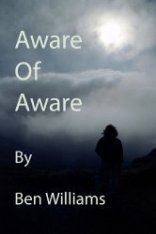
This is a subject that I discuss at length in the book Aware of Aware. It is a subject that the men rampaging across Iraq and Syria at the moment would do well to consider, not just for the sake of those they are murdering, but for the sake of their own souls. As I mentioned in my previous post, there is evidence that the soul may not be eternal, and I’m pretty convinced that no NDE has reports of dozens of virgins waiting for those who have slaughtered others. 

Why Do We See a Decline In Reports Of NDEs With Age?

Over the past month I have summarized the key findings from the 3 main prospective studies looking into NDEs that all reported their results in the early 2000s. Since then there have been no large trials of this kind reporting in major medical journals – the research has reached a point where using the methods of the time, no more results of genuine academic interest will be discovered. The Parnia pilot study, like all the others, had established that NDEs were relatively rare (about 10%) and that there would need to be a very large number of Cardiac Arrest (CA) survivors to produce a “proven” out of body experience (OBE), the ultimate scientific result. Dr. Parnia and his team of co-investigators set up the AWARE study in 2008, with the objective of recruiting just such a high number in the hope of discovering this “smoking gun”.

If the NDE is real, and the OBE is a real element of NDEs, then it is inevitable that one day the AWARE study will produce one or more proven OBEs, and that afterwards more studies will produce an increasing number of similar results. This is the baseline that I assume in the book Aware of Aware, because for me, someone who has always believed in the existence of the soul, and having encountered credible people who have told me about their NDEs (usually reluctantly), this result is not the most interesting that can come out of this area of research. It is a bit like when man first went into outer space, or reached a high enough altitude to notice the curvature of the earth, the observation that the earth was not flat was not a surprise. So it is with believers in NDEs, a proven OBE will only tell us what we already knew. However, for the large numbers who don’t believe that NDEs are real or that the soul exists, this piece of evidence is crucial, and in my view has the potential to be the most important scientific finding ever as it will end the materialistic view that modern man has developed of life and his own existence.

For me, one of the most interesting findings from NDE studies is the correlation between age at the time of CA and reporting an NDE. The most common and palatable explanation for this is that the ability to report declines with age due to loss of memory function. This seems like an acceptable hypothesis until you look into it in a bit more detail.

Firstly, it is just a hypothesis. None of the three studies performed prospective investigations to link memory function with reporting an NDE – (there were no differences in psychological factors between experiencers and non-experiencers). To link memory directly to reporting an NDE would require adding a comprehensive memory test, or questionnaire, to the interviews that were conducted.

Personally, I am not convinced about the lack of NDEs in older patients being memory related. The first reason for this is the huge difference between reports of NDEs in the young (especially pre-adolescent) and old, with younger patients having an incidence of more than 50%. Whilst memory function does decline with age, older people do still report NDEs, so it is not the fact that a younger brain has a unique ability to remember this kind of experience. Nor can age-related decline in function account for such a huge disparity. Unless a patient has Alzheimer’s, older people do still remember dreams and recent events, maybe not quite so well, but the differences of reported events would require a decline of function many orders of magnitude higher than is generally the case.

Another very interesting piece of data that comes out of the Van Lommel study is the fact that women are more likely to have an NDE than men. In the Dutch study the overall incidence of reported NDE is 12%, however with women it is 21% (p=0.011 – p values relate to statistical significance; in general a p value lower than 0.05 is considered statistically significant as there is less than a 1 in 20 chance that this outcome could have occurred randomly). The fact that women were on average 5 years older, is also directly relevant to this discussion (mean age for men 61 vs 66 for women).

To put this result into the context of the issue of memory being the driving factor behind age related differences in reporting of NDEs, for this to be true, a 61 year old man would have to be nearly twice as likely to have severe memory problems as a 66 year old woman. This doesn’t ring true, and there is nothing in the literature to support this. There was some recent data to suggest minor differences between sexes with regard to reported changes in memory (in the HUNT3 study, Holmen et al. reported that 1.2% of women and 1.6% of men, aged 30-89, reported severe memory problems, changing to 0.9 vs 1.5% age range 60-69), but this does not account for the differences in reported NDE. Incidentally this study also showed that there was little difference in reports of severe memory problems between younger and older patients, however there was an increase in reporting of some minor memory problems as age progressed, but this again would not account for the greater than 5-fold difference between reports of NDEs in young subjects vs old.

So what is going on? For me that is the biggest question of all. If physiological and psychological factors cannot account for age related reduction in reporting of NDEs then maybe there is some other “unscientific” factor. Given that we are entering uncharted territory with regard to science potentially proving the existence of the soul, it should not be surprising that conventional science cannot answer questions regarding the incidence of NDE occurrence.

In Aware of Aware I propose some potential answers as to why it is that we observe these differences in reporting of NDEs, including the potential for Soul Death. Such an idea might be extremely disturbing to some, but to those familiar with various religious texts, this is very familiar.

I have a favor to ask regular readers of this blog. For a short time (till the end of June) I will be making Aware of Aware available at the lowest price Amazon will allow. If you have the time, and want to help me, please could you buy a copy, read the book and then do one of two things:

  1. If you enjoy the book and feel it is relevant to the discussion, post a review on Amazon.
  2. If you don’t enjoy it, please refrain from posting a negative review at this stage, rather, please could you contact me through this site, using the “contact me” link in the header or complete the form below and let me know how I could improve it.

(to buy click on one of the links below to Aware of Aware or search on your local Amazon site in either the kindle or book section – NB: it’s not always on the first page of a search!):

Aware of Aware US Amazon Kindle ($0.99)

Aware of Aware US Amazon Hard Copy (should be $7.63 by end of June 2nd)

I will shortly be updating the book with some of the data that I have been posting here, as well as trying to improve the overall content in any other ways possible, so your suggestions or comments would be very timely.

Cheers!

← Back

Thank you for your response. ✨

Last But Not Least

This is the 3rd and final overview in my series of reviews of prospective NDE studies. The last study, A qualitative and quantitative study of the incidence, features and aetiology of near death experiences in cardiac arrest survivors, was published in 2001 in Resuscitation. The author was Dr. Sam Parnia, who is very well known to the readers of this blog. This study was in fact the pilot study for the ongoing AWARE study. (pilot studies are small scale studies designed to identify any issues with technique, and also gain an understanding of numbers that would be required to drive a result from a planned larger study)

The study was conducted at Southampton General Hospital over the course of one year. This was another study that exclusively looked to prospectively recruit Cardiac Arrest (CA) survivors. Patients were interviewed within a week of the event, and any memories that were recorded were assessed using the Greyson scale. The investigators also assessed various physiological parameters such as hypoxia, electrolyte disturbances, drugs, as well as psychological factors such as religion.

This study was the first to prospectively deploy the use of “targets” to verify OBEs (i.e. to prove whether or not they are indeed veridical). Cards with images facing the ceiling were placed above the beds in the resuscitation suite. To quote Dr. Parnia on the use of these images:

“If OBEs are indeed veridical, anybody who claimed to have left their body and be near the ceiling during a resuscitation attempt would be expected to identify those targets. If, however, such perceptions are psychological, then one would not expect the targets to be identified”

This statement is problematic, but it is a moot point in this instance, as I shall explain.

The results of the study can be viewed in the abstract below, but to briefly summarize, out of 63 CAs, only 4 (6.3%) subjects had an NDE by the Greyson scale. There was no difference in psychological or physiological factors between those who experienced an NDE and those that didn’t. There were slightly higher levels of oxygen in the blood of those who experienced an NDE, than those that didn’t, but the numbers were too small to form a conclusive causative association. There were no OBEs reported, not just that no one saw the cards, but that no one even reported an OBE.

Once again, we see very small numbers of CA survivors who either experience, or are able to remember, an NDE. This influenced the eventual design of the AWARE study, with the investigators deciding that there would need to be at least 1000 CA survivors to sufficiently power the study and generate enough cases to form statistically significant conclusions about NDEs. Because there were no reported OBEs by any patients, this study did not inform the team as to how they should progress with the targets.

This last point is important, as I point in my book Aware of Aware, the same card based targets were initially deployed in the AWARE study. This is a relatively limited and crude way of verifying OBEs since not all patients report seeing themselves from directly above. There are other issues that I will not belabor here, but I understand that the targets have been refined and become more sophisticated as the AWARE study has progressed.

So this concludes my mini-series of reviews of the 3 main prospective studies that have been published on NDEs. I will discuss the combined findings and implications in another post, but suffice to say, these studies at once lend credibility to the NDE phenomenon and the area of research, but also leave the most important question unanswered, namely, is the NDE proven to be a genuine transcendental experience in which our conscious separates from us, or is it all just happening in our heads. Personally, I believe that the NDE is the former, and therefore it is logical to conclude that it is only a matter of time before a target is identified (the pretext for the book Aware of Aware). Hopefully it won’t be long before we find out if the AWARE study has indeed achieved this goal.

Abstract:

Aim :To carry out a prospective study of cardiac arrest survivors to understand the qualitative features as well as incidence, and possible aetiology of near death experiences (NDEs) in this group of patients. Method : All survivors of cardiac arrests during a 1 year period were interviewed within a week of their arrest, regarding memories of their unconscious period. Reported memories were assessed by the Greyson NDE Scale. The postulated role of physiological, psychological and transcendental factors were studied. Physiological parameters such as oxygen status were extracted from the medical notes. Patients’ religious convictions were documented in the interviews and hidden targets were used to test the transcendental theories on potential out of body claims. Those with memories were compared to those without memories. Results : 11.1% of 63 survivors reported memories. The majority had NDE features. There appeared to be no differences on all physiological measured parameters apart from partial pressure of oxygen during the arrest which was higher in the NDE group. Conclusions : Memories are rare after resuscitation from cardiac arrest. The majority of those that are reported have features of NDE and are pleasant. The occurrence of NDE during cardiac arrest raises questions about the possible relationship between the mind and the brain. Further large-scale studies are needed to understand the aetiology and true significance of NDE.

 Image

Trailblazing

The second paper that I am going to review while we wait for the publication of AWARE is the seminal study published in the Lancet in 2001 by Pim Van Lommel, “Near-Death experience in survivors of cardiac arrest: a prospective study in the Netherlands”. This study actually began in 1988, and was carried out in 10 hospitals in the Netherlands. It was the first prospective study examining the phenomenon of NDEs in patients surviving cardiac Arrest (CA). Prior to this everything that had been presented or published was from retrospective studies which are open to criticism due to factors such as patient self-selection and long periods of time between the event and interview.

In this study, consecutive CA survivors were interviewed within a few days of resuscitation. Follow up interviews were conducted 2 years and 8 years later (hence the long period between initial enrollment in 1988 and publication in 2001). A number of baseline variables such as: demographic, pharmacological, physiological and psychological factors were recorded and compared between those who had NDEs and those who didn’t. NDEs were scored according to a weighted core index, determined by the presence and quality of 10 core elements (awareness of being dead; positive emotions; out of body experience (OBE); tunnel; communication with light; observation of colors; meeting dead people; life review and presence of border).

I am not going to repeat all the results, which are in the abstract at the end of the article, but as with the Greyson paper, I am going to highlight the most interesting points, and discuss the author’s comments:

  • A total of 18% had some kind of experience, with 6% having a superficial NDE, and 12% a core NDE, 7% had a deep experience. Van Lommel suggests that this may have been an over representation of true NDEs as the weighted index created false positives. In his conclusion he suggests that the true proportion of people having NDEs is in the range of 5-10%. Like Greyson he suggests that the fact that not all people who survive CAs do not have NDEs is possibly due to problems with short term memory. This is supported by two pieces of evidence from this study:
    • Age is a determining factors of whether an NDE is reported. Patients who are younger are more likely to report an NDE. Short term memory deteriorates as we grow older, so this is certainly a possible explanation.
    • Length of time that CPR was undertaken was also related to frequency of NDE, with longer times reducing the number of reports. Long periods of CPR are also associated with subsequent problems with short term memory.
  • Women, who were generally older than men, were also more likely to have an experience than men. Again this is a very interesting finding, and one that I will refer to at the end.
  • This study had a notable, and now famous, “veridical” OBE (the only time I ever come across the word veridical is in relation to NDEs, and seems to be used to create an extra layer of jargon that the user hopes will lend scientific credence to reports. In reality it just means truthful, and relates to the fact that the account of the OBE had an independent witness to the events observed that corroborates the OBE account.) In this account a subject who was in a coma after a CA, had his false teeth removed by a nurse. She placed the teeth in a crash car, and forgot about them. A week later, when the nurse went to visit the patient, he recognized her and told the other carers that she knew where his false teeth were. The nurse reported that he was definitely in a coma, and could not have possibly seen or known what she did with his teeth, or the other events that he reported.
  • Other titbits:
    • Patients with more resuscitations had a higher chance of experiencing an NDE – if they had two CAs, they may only have had one NDE.
    • No relationship between frequency of NDE and time to first interview (memory of the NDE, once established, didn’t deteriorate)
    • Interviews 2 and 8 years later showed that patients who had an NDE were generally more spiritual and prone to believing in an afterlife; in contrast, patients who had not had an NDE were more likely not believe in the afterlife, and become less interested in spirituality as time progressed.

Van Lommel comments on the marked difference in the kind of experiences described by the subjects who experienced NDEs in his study compared to the kinds produced in studies where “NDE like” experiences were induced through chemical or other means. He concludes “NDE pushes at the limits of medical ideas about the range of human conscious and the mind brain relationship.”

My thoughts about this study are that once again we see this low percentage of patients who have NDEs, and that the chances of experiencing, or remembering the experience deteriorate with age, but which is it? Are patients who grow older less likely to have an NDE or less likely to remember it? While most researchers on this subject suggest that it is memory related, and some of the data from this study may support that, there are other pieces of data that hint at other possible explanations. I find it interesting that during the course of the 8 years of follow up after their cardiac arrests, patients who had not experienced an NDE had progressively less interest in spirituality. In Aware of Aware, as one of a number of potential explanations for not everyone having NDEs, I discuss the possibility of the spirit dying. Is this what we are seeing in these patients? Are the cares of life suffocating the inner being?

Another finding in the study that is of interest is the fact that women are more likely to experience an NDE than men, in spite of being older. I have often noticed that many churches have a higher proportion of women than men (of course mosques are different, but that is a whole other story). I have pondered this and wandered if there are genetic reasons for women showing a greater predisposition towards spirituality. Historically men have been more likely to be involved in violent struggle, be it wars, or one to one fighting. The most successful would be those who are best at winning, and therefore least able to show compassion. These would be the genes that would most commonly be passed on. I believe that spiritual people are generally more compassionate, and that this data may be evidence that men are either less able to “host” a spirit or less able to sense spiritually. Again, the whole issue of the link between spirituality and genetics is discussed in much greater length in Aware of Aware.

I will review the last prospective study, authored by Sam Parnia himself, in my next post. Hopefully it won’t be too long before I am commenting on the one we are all waiting for…the AWARE study.

Abstract:
BACKGROUND:
Some people report a near-death experience (NDE) after a life-threatening crisis. We aimed to establish the cause of this experience and assess factors that affected its frequency, depth, and content.
METHODS:
In a prospective study, we included 344 consecutive cardiac patients who were successfully resuscitated after cardiac arrest in ten Dutch hospitals. We compared demographic, medical, pharmacological, and psychological data between patients who reported NDE and patients who did not (controls) after resuscitation. In a longitudinal study of life changes after NDE, we compared the groups 2 and 8 years later.
FINDINGS:
62 patients (18%) reported NDE, of whom 41 (12%) described a core experience. Occurrence of the experience was not associated with duration of cardiac arrest or unconsciousness, medication, or fear of death before cardiac arrest. Frequency of NDE was affected by how we defined NDE, the prospective nature of the research in older cardiac patients, age, surviving cardiac arrest in first myocardial infarction, more than one cardiopulmonary resuscitation (CPR) during stay in hospital, previous NDE, and memory problems after prolonged CPR. Depth of the experience was affected by sex, surviving CPR outside hospital, and fear before cardiac arrest. Significantly more patients who had an NDE, especially a deep experience, died within 30 days of CPR (p<0.0001). The process of transformation after NDE took several years, and differed from those of patients who survived cardiac arrest without NDE.
INTERPRETATION:
We do not know why so few cardiac patients report NDE after CPR, although age plays a part. With a purely physiological explanation such as cerebral anoxia for the experience, most patients who have been clinically dead should report one.

Setting the Scene

While we wait for the official publication of the AWARE study in a peer reviewed medical journal, I thought it would be interesting to visit some of the previous research in this area. Over the next few weeks I will be commenting on the main prospective studies which were previously published in mainstream medical literature (as characterized by their searchability on PubMed), this would not include studies published in the Journal of Near Death Studies. I subscribe to this journal, so I do not mean to belittle it, however, at this stage I feel that referring to journals accepted by the academic establishment makes these articles more credible to those who are visiting this site who are not “believers”.

The first paper that I am going to comment on is Incidence and correlates of near-death experiences in a cardiac care unit by Bruce Greyson M.D. This was published in General Hospital Psychiatry in 2003. Here is the abstract:

Near-death experiences, unusual experiences during a close brush with death, may precipitate pervasive attitudinal and behavior changes. The incidence and psychological correlates of such experiences, and their association with proximity to death, are unclear. We conducted a 30-month survey to identify near-death experiences in a tertiary care center cardiac inpatient service. In a consecutive sample of 1595 patients admitted to the cardiac inpatient service (mean age 63 years, 61% male), of whom 7% were admitted with cardiac arrest, patients who described near-death experiences were matched with comparison patients on diagnosis, gender, and age. Near-death experiences were reported by 10% of patients with cardiac arrest and 1% of other cardiac patients (P<.001). Near-death experiencers were younger than other patients (P=.001), were more likely to have lost consciousness (P<.001) and to report prior purportedly paranormal experiences (P=.009), and had greater approach-oriented death acceptance (P=.01). Near-death experiencers and comparison patients did not differ in sociodemographic variables, social support, quality of life, acceptance of their illness, cognitive function, capacity for physical activities, degree of cardiac dysfunction, objective proximity to death, or coronary prognosis.

Greyson is one of the most widely published researchers on NDEs in the established literature with a host of citations to his name. He is also the creator of the Greyson NDE scale, an interview tool used by researchers to establish whether the experience is an NDE or otherwise (if the subject scores greater than 5-7, then the experience is classified as an NDE). In other words Greyson is NDE royalty, along with the likes of Raymond Moddy, Michael Sobom, Kenneth Ring and relative newcomers like Sam Parnia.

This study was prospective, which means that it was set up in advance of the events recorded in it, with clearly established protocols designed to capture various data around the phenomenon. Subjects were included in this study if they had been admitted to the University of Virgina Hospital with a number of possible different cardiac outcomes. Once the patients had stabilized (within 6 days) they were asked to complete a questionnaire which identified various baseline (pre-existing) characteristics such as sociodemographic factors (income, social isolation etc) and severity of cardiac incident among others. They were also asked to complete the Greyson scale questionnaire, and if they had a score higher than 7 they were assigned to the experiencer group.

The aspect of this study that differentiates it from others is the use of matched controls. Matched controls are basically a way of trying to identify what variables (changeable characteristics such as belief) might contribute to a phenomenon when key characteristics are fixed. In this study they “matched” the subjects who experienced NDEs with subjects who didn’t experience NDEs but had similar age, gender and primary diagnosis. They took the NDEers and the matched controls and conducted more in depth interviews identifying such things as prior paranormal experiences. By doing this it is possible to identify factors that are associated with someone having an NDE. They also compared characteristics of the NDEer group to the wider, unmatched, cohort who did not experience an NDE.

I won’t repeat the results that are presented in the abstract above, but rather highlight a few interesting findings and comment on some of the conclusions.

• NDEs were most common in those who had survived a cardiac arrest (10%), compared to 2% of the entire cardiac event cohort. This makes this a landmark study because it is the first to show that NDEs are associated with the patient actually being close to death.
• The mean Greyson score for the NDE group (27 patients in total) was 12.7. This compared to 21 of the 23 matched controls achieving a score of 0, and 2 of the controls who scored 1. This finding extends to the wider non-experiencer population, 96% of whom scored 0 and the remainder who scored less than 5. This has clear implications in that there is no grey area here (which might be the case if this was a purely physiological effect). You either have an NDE or you don’t.
• NDEers reported more prior paranormal experiences than the matched controls. Greyson makes the following remark “Experiencers in this study did in fact report more prior purportedly paranormal experiences than did non-experiencers. That difference may suggest that persons who believe they had a paranormal experience are more likely to report NDEs; or it may suggest that persons who have NDEs are more likely to interpret past experiences as paranormal.”

There is of course another potential explanation for this last observation that Greyson does not include. People who have NDEs report more prior paranormal experiences because they are more “spiritual” i.e. there is something about them that makes them more likely to have paranormal experiences AND NDEs.

This last notion, a predisposition towards spirituality, is something I discuss in much greater length in my book Aware Of Aware. One explanation could be that there is a genetic predisposition to being spiritually sensitive (the God Gene). Another explanation is that some people do not have a spirit (they either weren’t born with one, or they spiritually died). This may seem abhorrent, but if the NDE is real, and therefore the conscious (spirit) is real and independent of the body, then one perfectly valid interpretation of the data from NDE studies is that only 10% of people have a spirit.

Greyson addresses this very question in his study, speculating that the reasons that only 10% of subjects report an NDE is because they either couldn’t remember it or didn’t want to disclose. This may indeed be the case, and they are less troublesome explanations, but as disturbing as it might be, to exclude the possibility that there are two types of people, one with a spirit and one without, with no evidence one way or the other, is unscientific.

book cover image


Hints and allegations:

For anyone who has the same kind of interest in the AWARE study and NDEs that I have, the video in the link below is well worth a watch. For those who are new to this area, there is quite a lot of background information on NDEs, with the panel of 4 experts providing an overview of various facets, but there is also other very useful information and exchanges.

The panel discussion was held in December 2013 in New York and was sponsored by the Nour Foundation (I was hoping to go, but had already committed to attending a different medical meeting). The panelists were Peter Fenwick, a neuropsychologist who has published widely in the area of NDEs; Mary Neal, an orthopedic surgeon, NDE experiencer and author of “To Heaven and Back”; Kevin Nelson, Professor of neurology at the University of Kentucky, a specialist in understanding the science behind spiritual experiences and author of “The Spiritual Doorway in the Brain”; and Sam Parnia, who needs no introduction on this site. The only sceptic was Kevin Nelson, with the others being believers.

I am not going to summarize everything from the discussion, but rather pick on a few points that I found particularly interesting:

• There was a long esoteric discussion around the true definition of death. Sam Parnia used the standard medical definition of the heart and brain flatlining. In this state the brain is not functioning as evidenced by the lack of gag reflex when intubating, and the full dilation of the pupils, which no longer respond to light. Technically speaking it is during this state that Near Death Experiences occur, Dr. Parnia prefers to call them Actual death Experiences, as they are technically dead. Kevin Nelson described death in different terms, namely the point beyond which so much cellular damage had occurred that the body was no longer capable of supporting life. Without blood flow to the brain, or cooling, this can happen in a relatively short period of time. Interestingly he described the medical definition of the heart stopping as only a surrogate of death, rather than actual death. He asserted that it is impossible for people to return from real death.

• This leads to a discussion around the skeptic’s view that because the brain is not actually dead, it may be experiencing enough to generate the fabled OBE. Kevin Nelson described a series of experiments that have shown it is possible to fool the brain into having an OBE. These experiments have been discussed before, and shown not to be relevant to NDEs as the brain is quite definitely inactive in the flatliner state. There is a point where I am reminded of the expression “The devil always overplays his hand”, and while I am not suggesting that Dr. Nelson is of the devil, he shows himself to be at best ignorant, or at worst, a liar. He states with absolute certainty that in all heart attack cases the eyes are open. Sam Parnia, who has been relatively quiet raises an eyebrow at this point and says something along the lines of “Well in my job I see a heart attack at least once a week and I can say with absolute certainty that their eyes are closed”. This is important because not only does it undermine the skeptic suggestion that while the patient may appear unconscious, they are actually recording what is going on, but it also belies the extent to which skeptics will go to attempt to discredit the NDE phenomenon, including making things up (to put it politely).

• The last, and most intriguing section of the discussion (which begins around the 50 minute mark), begins with the facilitator asking Sam Parnia “Do you want to tell us about your study”. The answer, “Not right now!” was particularly interesting given that he had already released some results in the November American Heart association meeting that I refer to in an earlier post. He even goes on to specifically say at 52 mins that he can’t divulge the results. Why not if they are already in the public domain? Does this mean that the paper which will hopefully be published before long will contain a validated OBE? This section was concluded with a remark by Dr. Parnia that evidence is coming through that the mind can exist without the body.

Kevin Nelson wrapped up with a quote from Carl Sagan that to prove extraordinary claims you require extraordinary evidence. Sam Parnia nodded in agreement. He said they have enough evidence now to make them want to pursue their research further. One such piece of evidence he referred to was the first time that they (or anyone) were able to fully verify consciousness during a 3-5 minute period, using external stimuli, when it was absolutely impossible for the brain to be functioning.

Peter Fenwick had the last word, in which he described the previous difficulties in obtaining funding for their research, mainly to do with the grant review process in academic and private institutions (this is an area I am very familiar with since a part of my job is advising medical researchers on how to prepare grant applications that will be successful). However, he hinted that they may finally be overcoming these obstacles…maybe they should try crowd sourcing, I am sure they could raise a significant amount from the millions of NDE believers.

Experiencing Death: An insider’s Perspective

book cover image

Proof Of Heaven (maybe)

The fact that this book was written by a neurosurgeon instantly gives it a credibility that wouldn’t otherwise be there. Eben Alexander has believed for most of his adult life that consciousness is a product of electrical signals in the brain; a purely physical process. He had witnessed NDEs himself and dismissed them in the same manner that countless scientists and physicians before him had, drawing on the reductionist principles that lie at the heart of modern scientific thinking. He admits, with hindsight, this view was formed without any evidence to support it, instead subscribing to the mantra, the faith, that forms the foundation of methodological materialism..every process, every organism or object in this universe has a physical explanation for its existence.

This faith was turned upside down when he experienced an NDE of his own, except this was not strictly an NDE, it was the wandering of his consciousness while he was in a coma. He argues, very convincingly, that while he wasn’t technically dead, his brain was not in a state to generate the conscious experiences that he claimed to have. Many of the elements of his experience were similar in nature to previously reported NDEs, but some of the elements were unique, something that leads Dr. Alexander to conclude that he was meant to have these experiences, and as a result his life’s purpose is now to share what happened to him with the rest of the world.

Like many “believers”, I’m a sucker for this stuff. Ever since I heard about my fathers own NDE, I’ve been intrigued by the subject, and am perhaps more credulous than I should be as a scientist. So I lapped it all up…then I did some searching on google about Dr. Alexander, and that is where very real questions surfaced that spoiled the fuzzy warm feeling. Esquire ran an article on Proof of Heaven in which they had investigated Dr. Alexander’s claims. They interviewed a Dr. Laura Potter, who was the ER physician who had attended to him when he first arrived and was involved with some of his subsequent care. A number of statements she makes contradict his account:

  • Dr. Alexander did not, and could not have cried out “God Help Me!”. He was intubated, making speech impossible.
  • His coma was induced by drugs, unlike his claim in the book. He was also repeatedly bought back to some form of consciousness, this suggests that it is entirely possible that he hallucinated the entire experience.
  • Most troubling of all, he apparently admitted that he had dramatized some parts of the story to enhance the readability of the account.

What does all this mean? Was the whole thing made up? I hope not, and the unusual account of his meeting with God in a dark (physically but not spiritually dark) place was so similar to my own experience, that it made me feel that his story holds water. But that’s me, someone who has had an experience and met credible people, who have had NDEs, but to the skeptic or the inquisitive, the slightest whiff of dishonesty destroys the potential power of the rest.

I personally don’t believe he made it all up, but if he admitted adding things to enhance the readability, exactly how much did he add? This is why he has poisoned the potential well of his account, and not just his account but others too.

This whole field of research needs serious people like Eben Alexander, Sam Parnia, and Pim Van Lommell to contribute  to it, but it needs to be done in a manner that is rigorously credible, or they are wasting their time.

Publish or perish

Firstly, apologies for not adding to this blog for a while. Until recently there has been no further news on the AWARE study to report. However, an update has recently appeared on the Horizon website with a direct quote from the principal investigator of the study, Dr. Sam Parnia, in which he says that the results of the AWARE study have been submitted to a peer reviewed journal for publication.

This is obviously of interest to all those who have been following this research project since it was first announced back in 2008, however I am skeptical as to whether any paper will have more to say than the poster which was presented at the American heart foundation in November. My reason for this is that from my experience of working in medical research in the field of HIV, the route for getting data into the public domain is firstly to present at scientific congresses, and then write a paper based on these findings, with added analysis and discussion. It is rare that truly ground breaking results are revealed in the literature which have not already been hinted at previously. I hope I am wrong, but at this stage, given the poster, and given the book Dr. Parnia published last year, I am going to err on the side of caution and predict that the paper will not provide a validated OBE.

If the result is negative from the perspective of validating NDEs, then the hypothesis I propose in Aware of Aware will remain unproven. It will not have been entirely disproven as the study is still ongoing, and arguably the hypothesis is a working hypothesis that was at the mercy of original the methodology of the AWARE study, which appears to have been improved recently. It may be that subsequent presentations of data from this study provide the much sort after “smoking gun” of a validated OBE.

Once again, I commend Dr. Parnia for his efforts in this highly interesting area of research, and look forward to seeing the paper once it has been published (this may be several months from now due to the peer review process).

book cover image

Post Navigation