Do Rats Have NDEs?
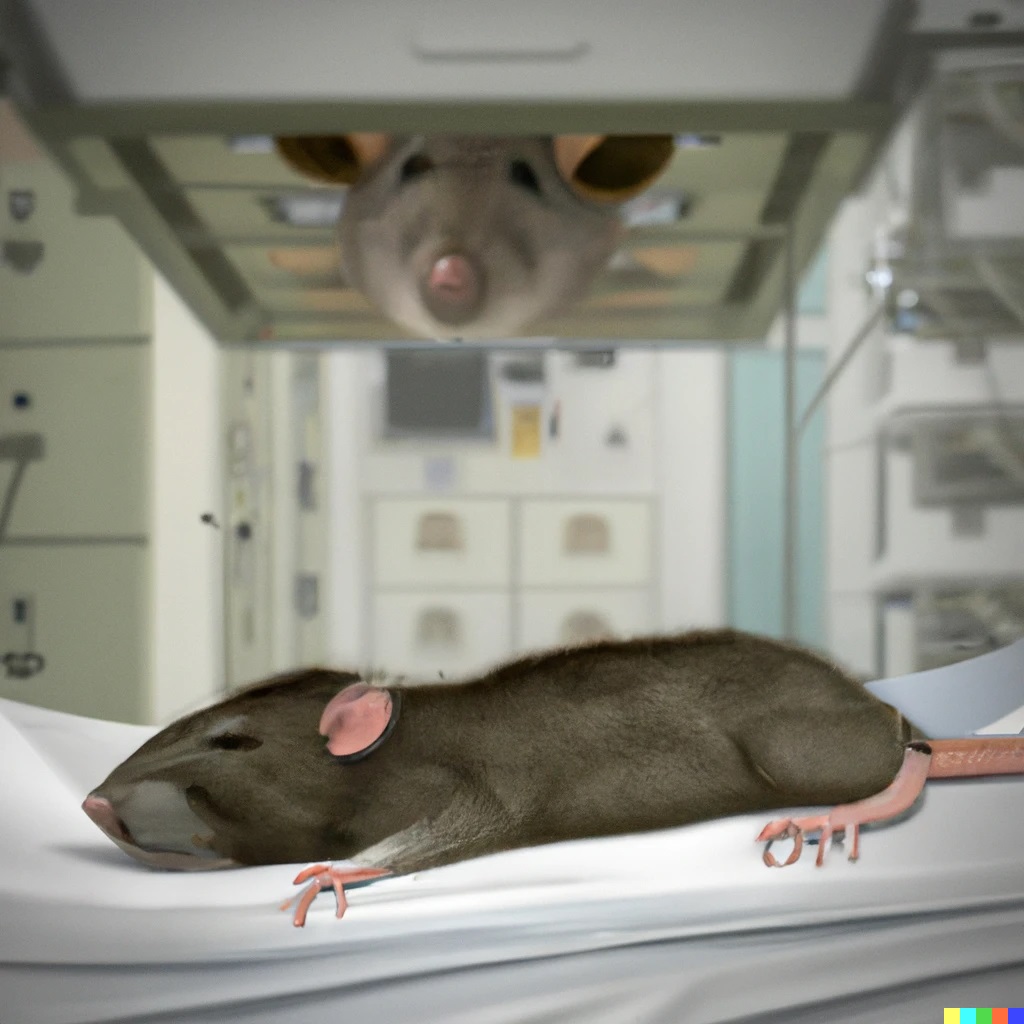
Apologies for the weird image, but this was my first attempt at using AI!
This study looks at what happens to rat brains around the time of death.
The main difference between this and the previous (infamous) rat study published by Borjigin in 2013 is that it analyses what happens through different layers of the brain to see if activity occurs at deeper levels for differing periods of time. The short answer to the question of whether there are differences is that for the most part, and in terms of differences that would be important to our area of interest – conscious activity – there are no major distinguishable differences in the timings and nature of initial activity in the different layers of brain immediately after death.
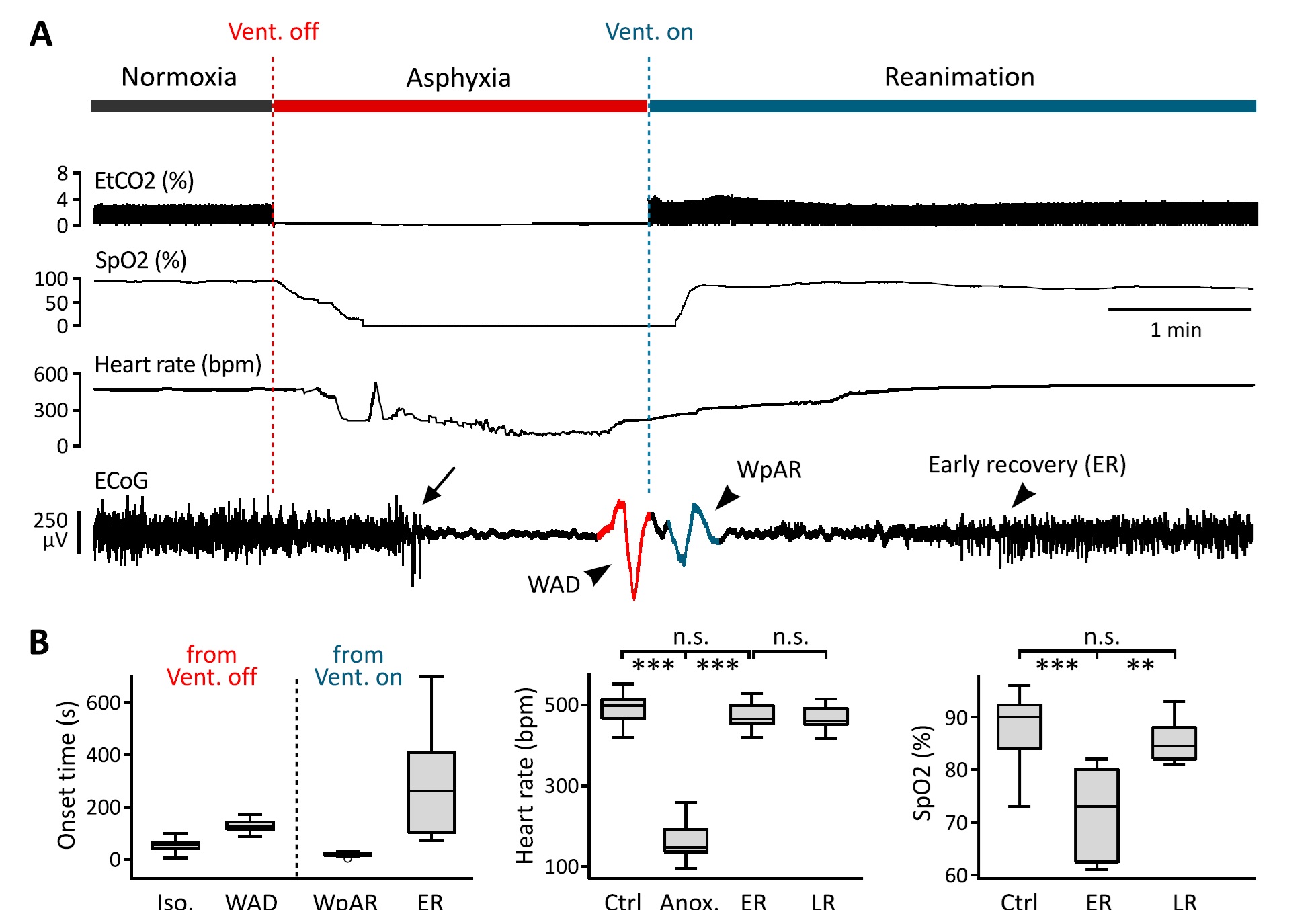
The diagram shows the rough timings with ECoG vs heart rate and blood oxygen levels (SpO2). ECoG (electrocorticogram) is invasive and uses probes that penetrate the exposed surface of the brain, as opposed to EEG – (electroencephalogram) which uses sensors placed on the scalp. This enables the study to identify electrical activity deeper in the brain.
What we see is that about 30 seconds after the removal of oxygen the heartbeat slows quickly to about 10% of its normal rate, then within about another 30 seconds normal brain activity ceases and the ECoG flatlines or becomes “isoelectric”. During this 30 seconds after CA it is plausible that conscious activity could occur. This is the claim made in the Bojigin study that got the materialist community so excited since it could be argued that NDEs occurred during this period. This paper references that discussion without asserting any new conclusions, or indeed using the findings from this study to confirm those conclusions. They have nothing to say about rats having NDEs. Well done, that is good science.
About a minute after brain activity has stopped, brain cells (neurons) undergo depolarisation (WAD). This basically means the cells move to a a non-functional, but recoverable state. Prior to this they are in a state of readiness and functional, but are not functioning. During this wave of depolarisation there is a slow wave electrical signal. This is not associated with conscious activity and is just a marker of the change in electrical state of the brain. Unlike the initial activity, this wave is not synchronous across all layers, i.e. it occurs like a wave spreading across the layers. Resuming the flow of oxygen allows for the brain to slowly recover activity.
Other than showing that the changes in brain activity that occur immediately after death are uniform through all layers of the brain, they also demonstrated that subsequent depolarisation is triggered in a set of neurons in a specific layer, and the WAD spreads from this locale. This is all very interesting if you are neurobiologist, but what does it mean for NDEs?
Unfortunately there were no able to recall awareness in follow up interviews, hence the lack of statements on Rat NDEs. As a result this study does not provide any new data to inform us about the viability of conscious activity immediately around the time of death. We knew that EEG activity that may be associated with consciousness persisted for about half a minute after CA from the previous rat study and the coma patients who had their life support withdrawn. Without any reports from the rats or dead coma patients of recollections of AWARENESS, it is impossible to correlate this activity with NDEs.
Let’s for a moment consider the wider implications of this in light of Parnia’s disinhibition hypothesis. As I have said before I have no beef with the hypothesis itself – namely that at some point after death the brain enters a different state in which consciousness is able to access previously unknown dimensions of reality. It may even be that dissociation occurs and the consciousness and brain part company and that this may be associated with specific markers observed on EEG – in fact if you adhere to the dualist philosophy, then it makes perfect sense. My beef is…well read previous posts! Presumably the brain would dissociate or become disinhibited while activity is still observed on the EEG or in this case ECoG, in which case it must happen in the first 30 seconds after CA (and in the absence of CPR or alternative life support). It is possible that full dissociation occurs during the WAD phase, but there are no markers of consciousness associated with this.
One of the limitations of the AWARE II study was the fact that on average it took over 4 minutes after CA for the specially designed crash carts to reach the resuscitation suites and another minute to get ready. This means that the first moments of any OBE, which presumably begin 30 seconds, or at the latest, a minute after CA, would be missed. In fact it is highly likely that if the OBE starts immediately after the EEG stops, then the crash cart probably arrives after the consciousness has been sucked up the tunnel!
Another post on a paper reviewing psychedelics and NDE-like experiences will appear before long. In the meantime, if you didn’t buy my book previously, then I have uploaded an updated version that contains an analysis of the AWARE II publication from last year, along with 7 OBEs that were verified by HCPs that are in my view every bit as convincing as iPad verified OBE – I am running a free promotion for 3 days on the Kindle version. It is available in all Amazon markets:
If you can’t be bothered reading my book or have read it already, but just want to “tip” me (Orson – real name) because you enjoy my work, then click below:
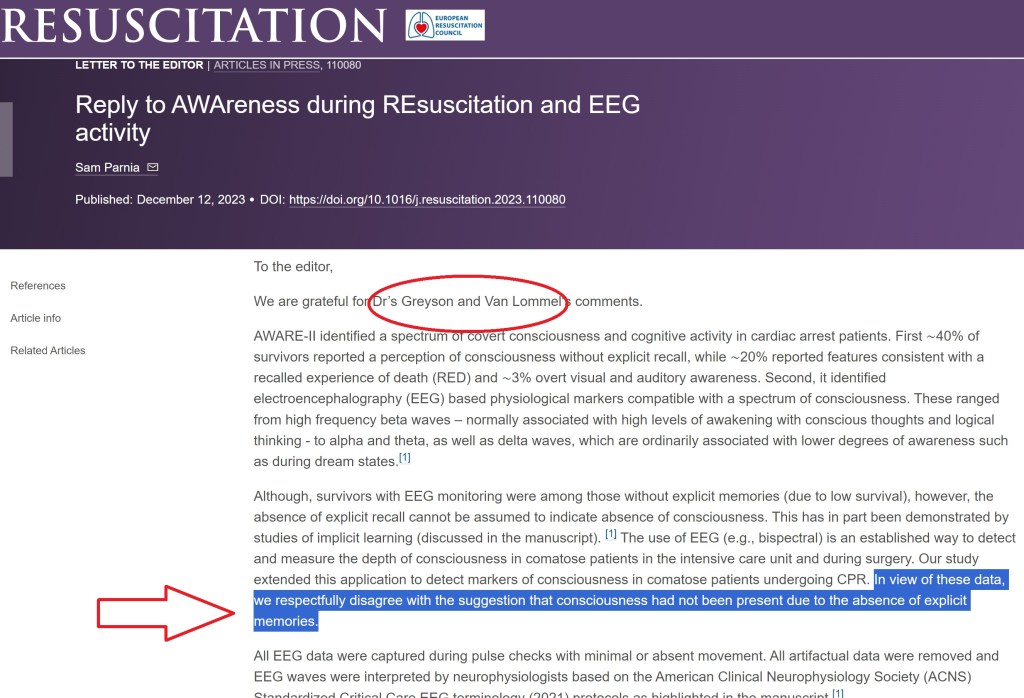

 AwareofAware