See No Evil Hear No Evil
This video was posted in the past few days and is a presentation by Sam Parnia and one of his researchers, Tara Keshavarz Shirazi.
The presentation focuses entirely on the output from the qualitative research they have done on NDEs, or REDs. I suspect this was the same dataset they used for their AWARE II paper. The presentation appeared to occur in a room in NYU to other researchers. I think some of these are NDE researchers as they seemed familiar from previous meetings. I will try to be kind, but it’s not easy.
With regard to the quality of the research, I was gobsmacked. The dataset was basically the first 43 NDEs from a set of “exceptional’ experiences from Jeff Long’s NDERF site. Given this is the “selection” criteria it is hard to take it seriously. Why?
- The NDEs from NDERF are all NDEs that have been uploaded by people self reporting their NDEs.
- Presumably the 100 exceptional NDEs were selected on the basis of their outstanding content. However, these criteria seem subjective at first glance.
- After all this time, why have only 43 been looked at? Parnia said that there would be an acceleration now?
There is absolutely nothing scientific or academic about this approach towards selection. This is no different from any of the books by NDE authors. I know why they are doing it…they do not have enough NDEs from their prospective studies, but by using NDEs off the internet as the basis for their information, they completely undermine the “scientific” credibility of the research in my opinion.
As for the research itself, they have developed the narrative arc presented in the consensus paper and AWARE II, which consists of a number of themes such as leaving the body, travelling to a destination etc. These are then broken down into a number of subcategories. I have no problem with this, and their work teases out a lot more detail about common elements of NDEs.
Parnia talks about memory circuits being wiped out during induced coma, and that experiences that patients have while they have moments of consciousness as their coma becomes less deep, meld with memories they have from their time during death. He talks about the memories collapsing into one memory and that we need to differentiate memories that occurred on the ICU ward from those that occurred while dead. Fine so far. Then he uses a specific example – when a patient has a moment of transient consciousness and tries to remove their breathing tubes, they are held down by nurses, and that the patient experiences this as a “bunch of evil people trying to attack them.”
This is how Parnia dismisses all Hellish accounts. He makes the assumption that ALL negative NDEs are the result of ICU experiences or something similar. In the consensus paper he cites a study by Cassol to support this position claiming that the phenomenology of negative NDEs is completely different from classical NDEs, which is in fact entirely the opposite of what Cassol concludes! I make much of this in my recent book…Did Jesus Die For Nothing, and discuss it in a podcast I took part in recently which will be available next week. This is extreme confirmation bias – Parnia will not see or hear evil. It exists, but he refuses to acknowledge it and dangerously is trying to exclude negative NDEs from future research.
In my view this is utterly outrageous, and I am not alone in thinking this. At a later point in the presentation he showed data from these 43 “subjects” that 90% encountered a being of loving light (this is much higher than previous percentages I have seen quoted). Parnia and another researcher toyed with the idea with making this one of the qualifying criteria for an experience to be classified as an NDE. A different attendee piped up at this point and said she would be very concerned about accidentally disqualifying what may be very important experiences by using only these positive criteria. Parnia basically ignored this objection. I am not just concerned, I am very frustrated. Parnia is trying to impose his own bias on the direction of future research, and in doing so may be missing important lessons from NDEs.
There was another point where Parnia’s approach was challenged by an attendee. Parnia was saying that people are all experiencing the same thing but are using their cultural background to interpret what they see differently. Again, this is an assumption arising from Parnia’s bias, and the other attendee used an analogy to describe his issue with this. He said that everyone in that room had been on a journey that morning to get to that room in New York, and while there were commonalities such as mode of transport etc, there were also differences such as route and what they observed. These differences weren’t just subjective differences, they were objective differences, and that by trying to impose generalities on the experiences, there was a risk of imposing your own bias as you developed a theory. The point seemed to be lost on Parnia. I will expand the analogy that the other attendee made.
Let’s say there were ten attendees and they were all new to New York. 5 took taxis, 3 drove in private cars 1 came by bus and 1 came on the subway. All took a form of transport – the necessary commonality, but their experiences were different. The ones in the taxis and private cars would have had reasonably pleasant experiences, except for the traffic, but the ones on the bus and the subway may have had less pleasant experiences. Now let’s say the one who took the subway saw a mugging. His experience of travelling in New York would have been negative and he would say New York was dangerous. From a purely objective external position, it is rational to say that New York can be dangerous, particularly if you take the subway. What Parnia is doing is to entirely discount this kind of experience. He is like a tourist brochure which says that New York is safe. Yes, it mostly is, but not always. The objective differences in these travellers’ experiences provide us with vital information about the best, or safest way to travel in New York, and that excluding them would be to exclude very important information based on a biased view that New York can only be safe.
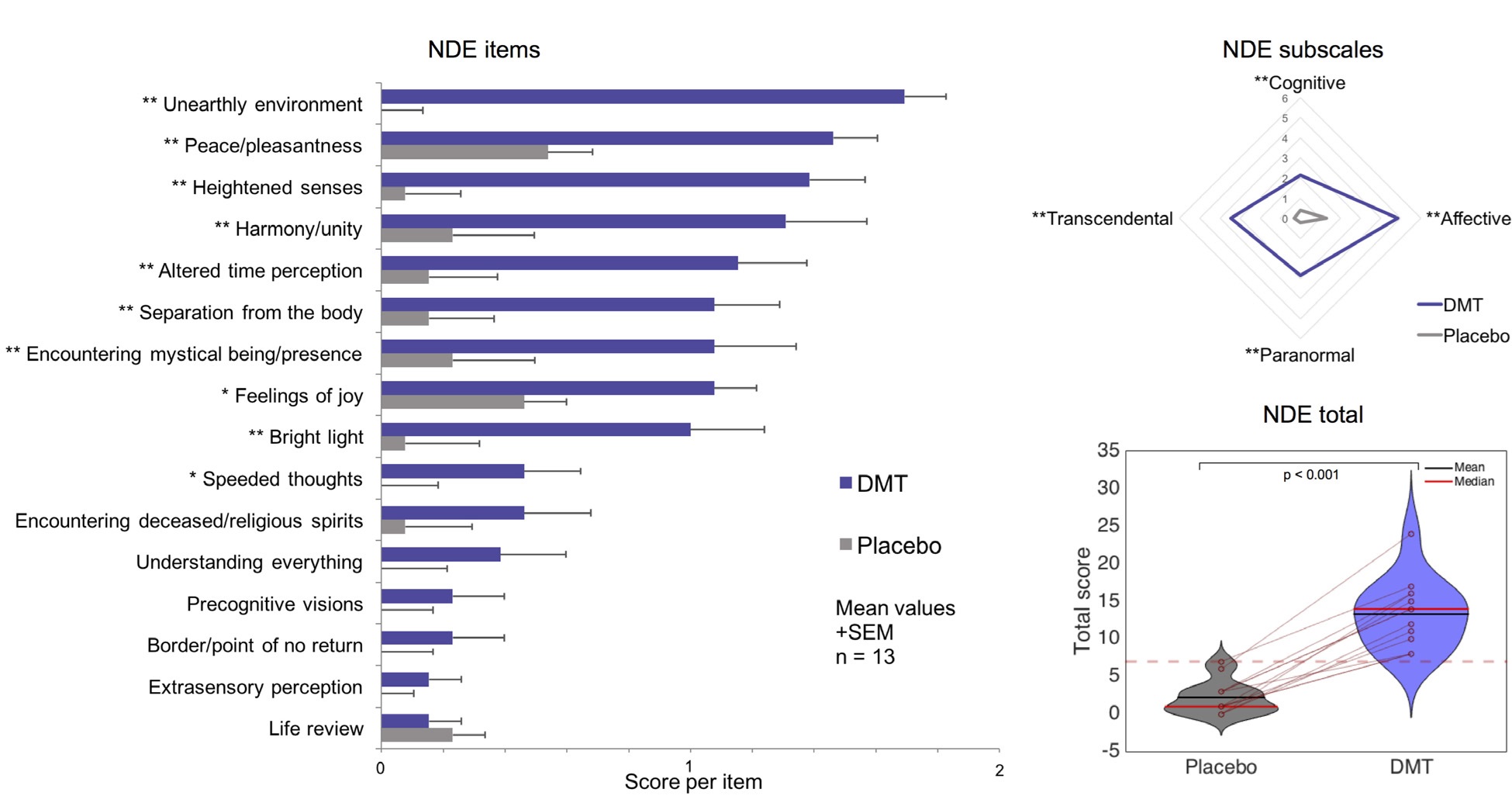
The same applies to NDEs. Hellish NDEs exist. They have the same phenomenology as positive ones, except people do not have a positive feeling. They experience a sense of timelessness, heightened senses etc. What we learn from these experiences may be extremely valuable and Parnia is indeed trying to impose his own bias of basically “seeing no evil and hearing no evil” on the future direction of research and discussion on the topic.
Also by assuming that all NDEs are essentially the same, and that assuming the differences in reports are due to cultural interpretations, he may be missing the fact that there are differences DUE TO cultural background, or indeed other possible explanations – which I explore in great detail in my latest book. What if NDEs are SUPPOSED to be different and create confusion? That is what I explore in Did Jesus Die For Nothing?
If you enjoy this blog, you may enjoy one of my books. Click on one of the links on the front page or visit my personal website to find out more about them:

 AwareofAware