Get the smelling salts…you will need them after this!
Firstly, thank you to all those who bought one of my recent books. You will be relieved to hear I won’t be banging on about these for a while now! Back to the day job!
This paper was published in July by Charlotte Marshall from Liege University in Belgium. She has a strong research record in the field of consciousness, and her name is attached to many of the papers we may have discussed in the past, and interestingly on both sides of the debate. She has done a lot of work in psychedelics and was author of a paper that is worth a separate review which came out in August and looks at patients who have had an NDE AND psychedelic experience. (I am pretty sure I discussed this in one of the comments sections but will return to it). It is interesting, and there are some flaws in it which are common to all of these papers. It is also worth noting that Marshall is doing her own version of the AWARE study. While I think she definitely lies on the physicalist side of the debate, and is of the view that NDEs are generated by the brain, at least publicly, in my opinion, she does not appear to be of the same level of physicalist fanaticism as Bourjigin appears to be. I find her articles more balanced. Could be a smoke screen of course.
Much of her work focuses on trying to understand NDEs through various analogous brain-driven experiences: epilepsy, psychedelics and in this article induced-syncope (fainting):
EEG signature of near-death-like experiences during syncope-induced periods of unresponsiveness
Charlotte Martial, Andrea Piarulli, Olivia Gosseries, Héléna Cassol, Didier Ledoux, Vanessa Charland-Verville, Steven Laureys, NeuroImage, Volume 298, 2024, 120759,
During fainting, disconnected consciousness may emerge in the form of dream-like experiences. Characterized by extra-ordinary and mystical features, these subjective experiences have been associated to near-death-like experiences (NDEs-like). We here aim to assess brain activity during syncope-induced disconnected consciousness by means of high-density EEG monitoring. Transient loss of consciousness and unresponsiveness were induced in 27 healthy volunteers through hyperventilation, orthostasis, and Valsalva maneuvers. Upon awakening, subjects were asked to report memories, if any. The Greyson NDE scale was used to evaluate the potential phenomenological content experienced during the syncope-induced periods of unresponsiveness.
What they do in this study is use a technique to induce syncope, which is a state of lower blood pressure/oxygen to the/in the brain which causes a state in which the patient faints for a very brief time (20-30 seconds). The patient is not unconsciousness, but enters a state of “disconnected consciousness”. Their eyes may be open or closed. Their heart is still beating, there is just a sudden alteration in the amount of oxygenated blood reaching neurons due to the physical process they went through. You probably did it when you were a teen…hold your nose and mouth closed and try to breath out really hard. You feel light headed etc etc. Afterwards they then do a Greyson scale questionnaire which everyone on here should be familiar with. I will come back to this. Here are some key quotes from the paper:
This study demonstrates the capability of syncope to induce episodes of disconnected consciousness, intriguingly resembling NDE episodes. Indeed, eight volunteers out of 22 (36 %) reported a subjective experience that met criteria for an NDE-like (i.e., scoring ≥7 on the Greyson NDE scale.
Interestingly, both DMT- and ketamine-induced experiences are known to closely resemble NDE phenomenology (Martial et al., 2019; Timmermann et al., 2018), just like we here demonstrate the resemblance of syncope-induced dream-like states with NDEs.
I will return to this in the next paper that I review in the coming weeks. I did review this paper in August, but as I said there has been a new paper that is really worth critiquing.
The hypothesis that the subjective experiences, as well as the associated pattern of electrical activity observed in this study, occur also in people who report a classical NDE in severe cerebral hypoxia is appealing but remains an open issue.
I don’t really think so as I will discuss below, but for someone from the “dark side” I approve of this use of language. It is neutral.
When it comes to this study there are three main issues (I’m sure I will think of more once people start commenting).
1.The first is something I now really agree with Sam Parnia on…this is “abuse” of the Greyson questionnaire, which was specifically designed for assessing people who had died and been revived long before serious research had been conducted in the field by skeptics. Many of the questions use descriptors that are so vague they could apply to any unusual state…even walking in a forest in a meditative state. To say that someone has had an NDE-like experience just because they score above 7 on the Greyson scale is now becoming a bit of a joke. This is the type of spurious assertion that is applied when the Greyson scale is used in psychedelic research. Marshall and Timmerman try to overcome this in the paper they published in August which I will review next time, but they don’t…as I will show. The experiences from NDEs are very very different when it comes to the kind of subjective experiences they describe. For instance here is an excerpt from a different study, cited by Marshall, from someone who had a syncope induced experience. Does this sound like anything that someone who has an authentic NDE would say?
A 48-year-old male patient was admitted for the diagnostic investigation of paroxysmal events. He experienced his first episode at age 46 when he felt “funny for milliseconds” while playing badminton. He lost consciousness immediately and fell. When he regained consciousness after about 3 min, he hallucinated many persons of small size (“like seeing them in television”) who were “parading like soldiers.” He could vividly hear their heavy steps.
Christian Brandt, Out-of-body experience and auditory and visual hallucinations in a patient with cardiogenic syncope: Crucial role of cardiac event recorder in establishing the diagnosis, Epilepsy & Behavior, Volume 15, Issue 2, 2009, Pages 254-255
I am leaning toward the term RED after all!
2. The EEG data is of a completely different type to that previously described by the likes of Borjigin in that it is not gamma, but beta, delta and theta. This is in line with psychedelics from my memory. It seems that there is as yet no consensus on exactly what EEG signals are specifically indicative for consciousness, dissociation etc. Until this is better understood, claims of EEG activity being indicative of consciousness immediately after CA or during CPR should be taken with a gargantuan pinch of salt.
3. Lastly, while all this is very interesting, I have yet to read of a veridical OBE from one of these types of study, in which a respected doctor confirmed that a subject observed things that were impossible for that patient to observe naturally. Of course, if they did, then this would actually prove dualism, although I’m sure hardened skeptics would try to create some quantum mechanical hypothesis to hide the naked truth behind. Titus Rivas created an excellent collection of these veridical OBEs in his book the Self Does not Die. This collection forms sufficient empirical evidence to support the dualist hypothesis and reject the physicalist hypothesis.
What may be happening with all these “NDE-like” experiences is that the brain is being sufficiently disrupted that it momentarily experiences “other dimensions” or states of consciousness that are much more advanced once the consciousness actually leaves the body in an authentic NDE. That is all speculation though. My immediate concern is Marshall has a strategy here to develop an ” scientific evidence-based” narrative around the hypothesis that ALL NDEs are a result of altered brain states, and that around the time of CA just such an altered brain state creates the NDEs that people report. I am very concerned that she has set up her AWARE-like study purely to reject the Dualist hypothesis, which would be easy by under-powering it, but using jargon to confuse the wider scientific community and media into believing the evidence is conclusive. My “prayer” is that she will be surprised and end up generating at least one verified OBE that supports the dualist hypothesis – this would of course give Parnia an aneurism after spending 20 years trying to achieve that! But in all truth, unless a higher power is involved, there is a miniscule chance of her study producing a verified OBE for reasons we have discussed here before

 AwareofAware
What is the proper cut-off score for a classical NDE on the Greyson scale? Is it validated or more qualitative? The fact that that they don’t provide the specific scores or answers for the 8 participants is a problem given the nature of the scale.
LikeLiked by 1 person
They do give a breakdown of the scores. The cut-off is 7, but the difference between “NDE” and “non-NDE” is marginal and constitutes a range of scores…very much unlike in Greyson’s seminal paper of 2003 where they were only looking at people who had CA, or cardiac events and whose scores were very different with NDE being definitely NDE and non NDE group, very much not NDE.
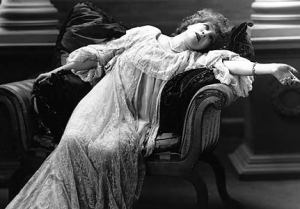
honestly, I was torn between putting a picture of this feinting lady up, or a picture of me on the toilet straining myself as I try to “curl-one-out”. When you are struggling to have a bowel movement, you potentially induce syncope. The whole thing is a crock to be honest.
LikeLiked by 1 person
Thanks for the reply. I was also wondering if there is a review, book or chapter on all veridical OBE somewhere. I’d really like to dig into the topic!
LikeLiked by 1 person
The best book is the Self Does Not Die by Titus Rivas. There are probably thousands of veridical OBEs, but he has got over 100 well documented cases.
LikeLike
I doubt there will ever be an obe that will be scientificily validated. Other words, someone seeing an image of à dog on a self, l’île aware 1 set out to do. It doesn’t mean obes and NDES aren’t real.
LikeLiked by 1 person
In my mind, there is sufficient empirical evidence to state that OBEs are proven real therefore a scientifically validated one is inevitable if one of the three following situations occurs:
1. A study is set up with sufficient resources and sites to recruit enough subjects so that you have at least 1000 post CA interviews (so far AWARE I and II have only accumulated about 150).
2. A DHCA study produces one.
3. There is a “divine” intervention, for want of a better expression, and we get a hit in one of the current studies despite them being under powered.
LikeLike
Thank you for another post Ben. I always enjoy reading these posts.
I was a bit surprised by this remark:
“Of course, if they did, then this would actually prove dualism, although I’m sure hardened skeptics would try to create some quantum mechanical hypothesis to hide the naked truth behind.”
I know there are some theories out there that try to explain consciousness in a quantum mechanical framework. I don’t know personally if quantum mechanics can be used to explain consciousness or not. I think it’s an interesting question. The main heavy weight advocates for this view seems to be Roger Penrose and Stuart Hameroff. Again, I don’t know if this view is correct or not. I think there is still a lot of work to do to validate this view if it is correct. However, I don’t know if it necessarily contradicts with dualism. Penrose seems to have been quite agnostic in his views regarding the possibility of consciousness existing in some form after death.
Here is a quote from Hameroff (although I think in some sources I’ve seen it attributed to Penrose…)
‘The quantum information within the microtubules is not destroyed, it can’t be destroyed, it just distributes and dissipates to the universe at large.
‘If the patient is resuscitated, revived, this quantum information can go back into the microtubules and the patient says “I had a near death experience”.’
He adds: ‘If they’re not revived, and the patient dies, it’s possible that this quantum information can exist outside the body, perhaps indefinitely, as a soul.’
https://www.dailymail.co.uk/sciencetech/article-2225190/Can-quantum-physics-explain-bizarre-experiences-patients-brought-brink-death.html
LikeLiked by 2 people
Yes, I’m familiar with their theory, and tried to understand their paper on it but not being sufficiently knowledgeable on quantum mechanics, did not really get to grips with it. In my view that explanation given there by him is still a slightly materialist explanation, and one that would keep the hardcore atheists entertained for centuries. For me, quantum mechanics is often waved like magic wand when materialists can’t provide a good theory or evidence to reject a theist or dualist hypothesis. I have encountered this in the origin of life discussion when hardcore atheists have resorted to claiming that there is some quantum mechanical law that drives information to form where there is none. It is absurd, but some people buy into it.
I am very comfortable with the idea that the processes that occur when our consciousness interacts with our brain occur primarily at the quantum level, rather than the chemical or biological level, but beyond that I would be uncomfortable speculating further.
LikeLike
Hi Pablo. Your post takes me back! It was this very article that kick started my interest in NDEs. Was it really 12 years ago – frightening thought! Where does the time go?
Much Hygge.
Paul
LikeLike
There will never be a hit on visual targets which are hidden and secret (i.e. secret targets hidden up high) during the NDE OBE in medical settings. Such studies are not measuring the accuracy of the recalled information during the OBE – they assume the patient has floated off above their body, and they are only seeking to measure this assumption.
On the other hand, OBE researchers like Blanke don’t bother using any visual targets – they assume it’s it’s all in your head – so why bother to measure the accuracy of the patients recalled information from their OBE.
To date there have been zero studies measuring the accuracy of the recalled information from the NDE OBE.
There are huge numbers of anomalous experiences, that provide evidence which seems to suggest that people can recall experiences which are not their own.
LikeLike
It is possible that there are two different things going on. I agree that for people to see what others have seen means that there must be a central memory “server” to which we all contribute and which we may all be able to access under certain circumstances. It is possible that during certain induced non-NDE experiences we are able to glimpse into this, and that during authentic NDEs people are able to get full access, for instance during the life review.
However, I think that with OBEs something else is going on. I do not believe that people are tapping into the consciousness or recollections of other people, but rather are experiencing the observation for themselves from their own perspective. This is certainly the only way that the reports from NDE-OBEs can be interpreted.
As for researchers treating the understanding the consciousness just floats off above the body, this is not an assumption, but rather a hypothesis derived from the thousands of reports that NDErs have made. There are multiple hypotheses to explain these reports, the one you seem to adhere to being just one, and the floaty consciousness being another. Providing evidence to support or reject these hypotheses is what scientists try to do. To date we have not gathered sufficient SCIENTIFIC evidence to make a decision on any of these hypotheses, but most of us have passionate beliefs which one is the true one!
In the case of the AWARE studies, in neither study was a hypothesis about OBEs proposed, but rather in both studies the aim with regard to putting the various shelves and iPad in the hospitals rooms was to establish methods to better understand what these conscious recollections are, and also ideally collect some evidence as well.
My guess is that Marshall’s equivalent of the AWARE study is set up with the intent of rejecting the “floaty consciousness” hypothesis, much easier to do given the issues we have discussed here before, than provide SCIENTIFIC evidence to support it.
Ultimately though, we have a mountain of EMPIRICAL evidence to support the “floaty consciousness” hypothesis…unless you are prepared to state that hundreds (if not thousands) of highly intelligent, highly trained, highly ethical doctors, many of whom are researchers themselves and started out as sceptics…are liars or fools.
LikeLike
They are experiencing the observations for themselves from their own perspective! But is this because the patient is literally located above their body? or as I propose, are the patients anomalously combining third parties experience, and locating their sense-of-self in the most logical perspective, to try to make sense of the combined third party experiences.
All the anomalous data suggests it is far more likely to be the latter, and thus it tells us something mind-blowing about the true nature of experience, and of our condition.
LikeLike
I agree Max. They should stimulate patients right temporal lobe, create an obe expérience and put images up on quelles. See if anyone gets them right. Maybe use the God helmet
LikeLiked by 1 person
xylophonepleasantlyd6ef174331
You can lead people to water, but you can’t make them drink :-). After decades, no researchers are using visual targets hidden from the subject, but visible to third parties, to just measure the accuracy of subjects recalled experience.
Induced OBE’s in the Wakeful, vs, spontaneous OBE’s during Cardiac Arrest seem likely to be different. In the former case, I suspect there is much less probability of the subject recalling a visual target hidden from them, but visible to the third parties (i.e. the researchers etc) surrounding the subject. And there is absolutely zero chance of the subject recalling a visual target that is secret from everyone!
Blanke’s paper on induced OBE’s with anomalous body perception provides evidence that wakeful subjects whose brain networks have been electromagnetically disrupted, might instead perceive a subtler effect, a distorted perception, caused by the combined wakeful perceptions of the subject, and the local third parties.
LikeLike
I was reading the AWARE studies again (1 & 2). I’m sorry if I asked this before but I wanted some verification. In AWARE 1 I believe there were no shelves places with the visual target and so the 2 reported OBEs obviously didn’t spot any targets. Was this the case in AWARE 2 as well? It says there was one OBE but that the experiencer didn’t report the target. It does not mention anything about missing shelves so I’m guessing that wasn’t an issue in AWARE 2. Is this true?
LikeLiked by 1 person
AWARE I there were hundreds of shelves in 20 hospitals, but the 2 OBEs occurred in rooms without shelves, but one OBE was verified by attending HCPs.
AWARE II the iPad was attached to a crash cart that had to be present during the CPR for a patient to be included in the study. Only 28 patients were interviewed, only 6 of them had NDE experiences, one had a very vague recollection of seeing forms that could have been doctors, but it was not the kind of OBE that we are used to hearing about, and may have been CPRIC.
LikeLike
NYU Langone is supposedly a high volume surgical center for DHCA. One of the biggest problems is survival rates of CAs. But with DHCA I read somewhere it’s over 80-85%, which is much better than what we saw with Aware. Certainly a more controlled environment as well.
LikeLiked by 1 person
My concern is that the procedure is such that it doesn’t induce “disinhibition”.
LikeLike
Hopefully the cooling would help people be able to retain their memory. I think a lot of people forget about their experience, much like how many people can’t remember their dreams. I think Pam Reynolds body was cooled as well though I think it was a different procedure.
LikeLiked by 1 person
But where is the memory stored Pablo?
LikeLike
lol that’s a good question and I have wondered about that as well. I’m personally agnostic on the issue of OBEs so one possible explanation is that this phenomenon isn’t real or at least that consciousness doesn’t leave the body. I know this is probably not a popular interpretation on this blog but it’s one that must be considered. If it is real then this forces us to rethink how we store our memories. Even if you do hold a dualistic world view I do think that there is some way our consciousness interacts with the brain. It’s also possible that during our earthly sojourn through life perhaps our brain filters our consciousness and so while we’re on this planet the brain is what we use to store memories relevant to our experiences here. I do think cooling the brain could help raise OBE reporting rates if many people forget their memories of OBEs after becoming conscious again.
I don’t know how relevant this is but I came across an interesting article not too long ago. Supposedly scientists were able to transfer a memory between mice. I think mouse A was taught to fear a certain stimulus and then when they “transferred” that memory to mouse B then B feared the same stimulus.
I’m currently reading erasing death by Sam Parnia. I saw your review on Amazon and I think a lot of people here read the book so I probably won’t say too much about the book when I finish but so far it’s turning out to be really good.
LikeLiked by 1 person
Sam Parnia new book Lucid Dying talks about this. Its a good read I highly recommend it
LikeLiked by 1 person
Anthony Peake new book ,called Near death Experences talks about the temporal lobes and their relationship with NDES and spiritual experiences. Melvin Morse books and researcher talks about the temporal lobes and the work of neurosurgeon Wilder Penfield. Their both good reads
LikeLike
saw this article on materialism
https://www.psychologytoday.com/intl/blog/sense-of-time/202411/physicalism-is-dead
LikeLike
Hi Ben. Forgive me for digressing from the topic of your post, but I thought I’d bring to your attention – if you don’t already know – that Dr. Peter Fenwick passed away on November 22. It’s a sad announcement, but he was able to reach the upper echelons of an octogenarian.
https://www.spr.ac.uk/node/19553
https://psi-encyclopedia.spr.ac.uk/articles/peter-fenwick
LikeLike
Thanks for telling me Thomas, that is sad to learn, but as you say he had a good innings. I was only talking about him with a Neurologist who knew him last week. One of the greats of the field and been on TV a lot over the years.
LikeLike
That is unfortunate. Hopefully he has a pleasant passing.
LikeLiked by 1 person
Rip Dr. Peter Fenwick. I spoke to him once on the phone. He was a nice man
LikeLiked by 1 person
He seemed like a nice person
LikeLiked by 1 person
Hello Ben. Im writing under this post because I dont want to desecrate the post of Peter Fenwicks passing by cluttering it with unrelated comments.
Do you have a link or something to where Parnia discusses whether CPR is enough to support the brain being conscious? I remember him writing/speaking about it, and during that refering to there being a kind of primary and secondary blood pressure required for conscious processes or something. Do you know what I mean?
LikeLike